
Sewer Line Repair in Beverly Cove, MA
Old clay laterals, shore-tree roots, and a high water table — Beverly Cove's sewer lines face the coast's full pressure. Local specialists diagnose with cameras and repair trenchlessly to protect your lot. Call (833) 713-2101.
- 24/7 emergency line
- Local North Shore specialists
- Camera inspection first
In short: Sewer line repair in Beverly Cove, MA 01915 starts with a camera inspection that checks clay-tile joints for root intrusion and groundwater seepage. Call (833) 713-2101 and describe your street — E. Lothrop, Hale, or Corning — for local guidance.
Sewer Lines in Beverly Cove, MA 01915
Beverly Cove pairs some of Beverly's oldest housing with some of its wettest ground. The 1890s hip-roof Colonials along E. Lothrop Street — one 1890 Colonial still stands as a neighborhood landmark — were built when vitrified clay tile was the only building sewer anyone installed, and many of those original laterals are still in the ground. Around them, 1960s family homes, 1979 chalet-style houses, shingle-style homes, and split-levels fill out a mixed coastal stock where the pipe under the lawn could be 130 years old or 40, depending on the house.
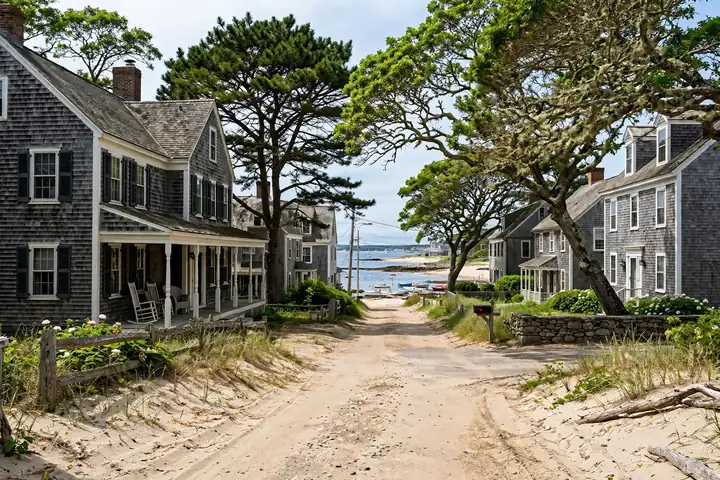
What unites the Cove is the water. The neighborhood sits directly on Massachusetts Bay between Hospital and Curtis Points, within walking distance of Lynch Park and the Brackenbury and Mingo beaches. Sandy, beach-adjacent soils drain fast but hold a high water table near the shore, and nor'easter season pushes storm surge against the same ground the sewer lines run through. An aging clay lateral here does not just carry wastewater — it negotiates with groundwater at every joint, every tide cycle, every storm. That is why camera inspections in the Cove check two things at once: offset joints where roots enter, and seepage where groundwater gets in.
Area Facts
- ZIP code
- 01915 (verified)
- Housing stock
- 1890s hip-roof Colonials, 1960s family homes, 1979 chalet-style houses, shingle-style homes, split-levels
- Era-typical pipe materials
- Clay tile with cast-iron DWV (1890s–1940s); cast iron or Orangeburg possible (mid-century); PVC (post-1980)
- Basements
- Full basements common; stone foundations on the oldest homes
- Soil & drainage
- Sandy beach-adjacent soils near Brackenbury/Mingo; high water table near the shore; glacial till inland
- Landmarks
- Lynch Park, Brackenbury Beach, Mingo Beach, Cove Elementary (20 Eisenhower Ave), Beverly Depot MBTA
Sewer Challenges in Beverly Cove
The Cove's signature problem is the meeting of old clay and coastal water. Those 1890s Colonials on E. Lothrop Street sit on clay-tile laterals whose joints — packed with mortar or oakum a century ago — are now the weak points mature shore trees exploit. Oaks and pines on the Cove's roughly third-acre lots send roots hunting for the constant moisture of a sewer line, and every opened joint admits both roots and groundwater. The camera footage from these lines tells the same story: root masses at the joints, infiltration staining where water seeps in, and offsets where sandy soil has shifted segments.
The high water table changes the stakes. A failed joint below the water level does not just leak sewage out — it admits groundwater in, sometimes in volumes that overload the line during nor'easters and spring tides. Homeowners sometimes notice the symptom pattern before the cause: drains that slow every storm season, a basement floor drain that burps after heavy rain, sewage odors that strengthen with the weather. Full basements, common in the Cove's older stock, put living space close to the building sewer's exit point, so backups arrive where they hurt most. Stone foundations on the oldest homes add their own wrinkle — the sewer exit through historic masonry needs care during any repair.
Then there is the question of how to fix it without breaking the property. Cove lots are small and close to the shore; digging an open trench risks undermining beach-side retaining walls and disturbing the tight landscaping these lots are known for. That constraint is exactly why trenchless lining pairs so well with the Cove: it seals every joint against both roots and groundwater from small access points, renewing the line without threatening the walls, the gardens, or the neighbors' view.
How Sewer Service Works in Beverly Cove
Every visit starts with a camera inspection tuned to the Cove's two failure modes. The camera travels the lateral while the technician watches for offset clay joints with root intrusion and for groundwater seepage at the bells — ideally timed when the water table is high, because infiltration shows best under pressure. A locating sonde marks each defect's depth and position, which matters on small lots where the repair must thread between the house, the retaining walls, and the street.
When the pipe is round but joint-damaged — the most common Cove finding — cured-in-place lining is usually the recommendation: a structural epoxy liner seals every joint against roots and groundwater in one continuous barrier, installed without disturbing the lot. Where the camera shows deformation or collapse, pipe bursting replaces the line along the same corridor through two small pits, preserving the retaining walls and landscaping. Open-cut replacement is reserved for cases where the path is lost or the grade has failed — and even then, the route is designed around the property's constraints, not through them.
Homeowners here should also know their era. A 1960s home on the inland side of the Cove may run cast iron or even Orangeburg rather than clay, and the fix path differs — bursting rather than lining for deformed fiber pipe. The camera settles the era question in one visit, which is why no recommendation here is ever made from the surface.
Streets and Landmarks We Serve in Beverly Cove
Local specialists serve the full Cove: E. Lothrop Street with its landmark 1890s Colonials, the Hale Street corridor, and Corning Street; the Lynch Park area and the streets walking distance to Brackenbury and Mingo beaches; the blocks around Cove Elementary at 20 Eisenhower Ave; and the commuter belt near Beverly Depot on the Newburyport/Rockport Line. Whether your home sits on the sandy beach-adjacent soils or the glacial till further inland, the inspection is calibrated to the ground beneath it. Call (833) 713-2101 and mention your street — the likely pipe era and the right first step are often known before the truck rolls.
Frequently Asked Questions
Do the sandy soils near the beaches affect my sewer line?
Yes. Sandy beach-adjacent soils shift more readily than till, which works clay-tile joints open over time — and the high water table near the shore means every opened joint admits groundwater. Camera inspections in the Cove specifically check for both offset joints and infiltration staining. Call (833) 713-2101 to schedule one.
My 1890s Colonial backs up every spring — why?
Spring combines the two forces that attack old clay laterals: root growth surging with the season and the water table rising with melt and rain. Roots that entered the joints over winter thicken rapidly, and groundwater infiltration adds volume the line cannot handle. A camera inspection maps the intrusion, and lining the line seals the joints against both forces at once.
Can you fix my line without disturbing my retaining wall?
Usually, yes. Trenchless lining renews the line from small access points without any trench near the wall, and pipe bursting needs only two pits positioned away from it. The inspection maps the line's exact path first, so the repair plan is designed around the wall rather than through it.
Is groundwater entering my sewer line a real problem?
It is one of the Cove's biggest. Infiltration through failed joints adds volume the line must carry, can overwhelm the system during storms, and on septic-fed properties overloads the disposal field. Lining seals the joints watertight — keeping water out is often as valuable as keeping sewage in.
How do I know if my line is clay tile or something newer?
The house's era is the first clue — 1890s to 1940s stock is typically clay tile — but only a camera inspection confirms it, along with the pipe's actual condition. Mid-century Cove homes may run cast iron or Orangeburg instead. The inspection answers the material question definitively in one visit.
What should I do if sewage backs up during a nor'easter?
Stop running water and avoid flushing — storm-driven backups worsen with every gallon. Keep clear of the sewage and call (833) 713-2101; the line is answered around the clock. After stabilization, a camera inspection determines whether the cause was a surcharged main, infiltration through failed joints, or a blockage the storm exposed.
Sewer Line Problems Don’t Wait. Neither Should You.
Call now and reach a local sewer line specialist serving Beverly, MA and nearby North Shore communities — 24/7.
(833) 713-2101Free to call · No obligation · 24/7 emergency line