
Sewer Line Repair in Ipswich, MA
A 1690 colonial and a 1985 Cape on the same street — Ipswich's era lottery demands camera inspections that reveal which century your pipe belongs to. Call (833) 713-2101.
- 24/7 emergency line
- Local North Shore specialists
- Camera inspection first
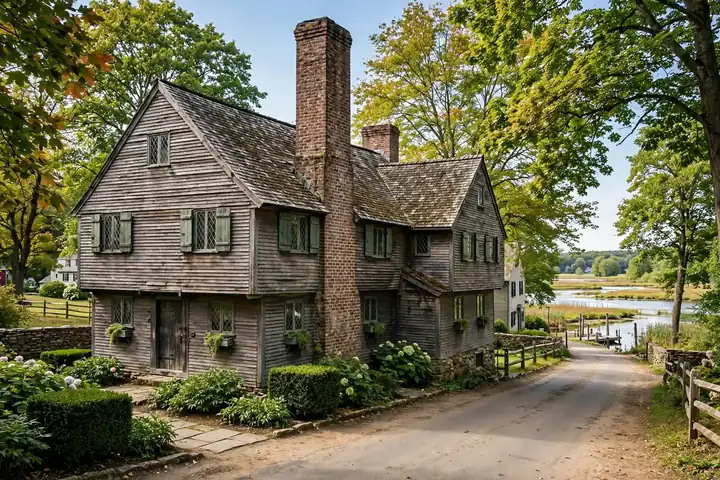
In short: Sewer line repair in Ipswich, MA 01938 starts with a camera inspection that settles the era lottery — 1690 clay or 1985 PVC on the same street. Call (833) 713-2101 to find out which era your pipe belongs to.
Sewer Lines in Ipswich, MA 01938
Ipswich is the era lottery. The median home was built around 1964, yet more than a third of homes date to 1939 or earlier — including famous pre-1730 First Period colonials — while 1970s–1990s subdivisions fill the modern end. A 1690 colonial and a 1985 subdivision Cape can stand on the same street, which means the sewer line beneath could be 300-year-old clay or 40-year-old PVC.
The practical rule the camera enforces here is simple: the age of the house approximates the age of the pipe, until the footage proves otherwise. River-corridor homes get special attention — the Ipswich River's saturated till accelerates joint failure, and riverside vegetation sends aggressive roots toward every opening. About two-thirds of homes are single-family detached, and the town's mix of antiquity and suburbia means every visit starts with the same question: which era is this pipe?
Area Facts
- ZIP code
- 01938 (verified)
- Housing stock
- Median built ~1964; 36.5% built 1939 or earlier; pre-1730 First Period colonials; 1970s–1990s subdivisions; 66.5% single-family detached
- Era-typical pipe materials
- Clay tile + cast iron (pre-1939 third); cast iron/Orangeburg (1940–69); PVC/ABS (1970s–90s subdivisions — the bright spot)
- Soil & drainage
- Ipswich River corridor; marshlands near coast; drumlin and glacial-till uplands; sandy outwash near Crane Beach; seasonal high water table
- Basements
- Full basements typical; finished or daylight basements common in 1970s–90s stock
- Landmarks
- Route 1A corridor; Ipswich MBTA station; Crane Beach dunes; Willowdale State Forest (40+ miles of trails); Ipswich River
Sewer Challenges in Ipswich
The era lottery is the challenge. Pre-1939 clay laterals — a full third of the town — carry the classic joint failure: roots, offsets, infiltration, the century-long negotiation with the earth. The 1940–69 cohort adds cast iron and Orangeburg: corrosion and ovalization, the mid-century failure modes. The 1970s–90s subdivisions are the bright spot — PVC and ABS laterals that mostly need maintenance rather than rehabilitation — but even there, the camera occasionally finds a surprise where an older line was never replaced.
The river corridor adds the environmental chapter. Homes along the Ipswich River sit in saturated till where the seasonal high water table presses on every joint, and riverside vegetation — willows, maples, the full riparian suite — sends roots toward the nutrient-rich flow with particular aggression. Marshlands near the coast and sandy outwash near Crane Beach create micro-conditions that vary street by street. A town-wide rule would be useless here; the camera reads each lot individually.
The diagnostic discipline this demands is the ‘age of house, age of pipe' rule with camera verification. The house's era predicts the pipe's era — First Period colonial, clay; 1985 Cape, PVC — and the footage confirms or corrects the prediction. That single habit prevents the two classic Ipswich mistakes: lining a line that needs bursting, and replacing a line that only needed cleaning.
How Sewer Service Works in Ipswich
The visit opens with the era question and the camera answers it. The technician reads the pipe's biography on the monitor — bell joints, fiber walls, smooth plastic — and the homeowner watches their line's century (or decades) reveal itself. River-corridor properties get infiltration assessment with the water table in mind; inspections may be timed with wet conditions when infiltration is the suspected finding.
Each era routes to its fix. Ancient clay with joint damage but sound barrels: cured-in-place lining, sealing every joint against roots and river-fed groundwater without disturbing the property. Deformed Orangeburg or collapsed sections: pipe bursting along the same corridor through two small pits. Sound PVC with buildup: professional cleaning and a maintenance schedule. The through-line is era-matched proportionality — the right method for the pipe's actual condition, not its assumed one.
Subdivision homeowners get particular value from the baseline inspection: knowing the line is sound PVC with decades ahead is worth the visit alone, and the footage becomes the property's reference for any future issue. Antique homeowners get the preservation-minded plan: trenchless methods that renew the line without touching the historic property. Both get the footage, the plain-language read, and the honest recommendation.
Streets and Landmarks We Serve in Ipswich
Local specialists serve all of Ipswich: the downtown with its cobbled streets and antique colonials; the Route 1A corridor; the neighborhoods around the Ipswich MBTA station on the Newburyport/Rockport Line; the Crane Beach dunes area and the sandy outwash neighborhoods; the Willowdale State Forest edge; and the Ipswich River corridor — upstream, downtown, and toward the marshes. Whether your home is a First Period colonial or a subdivision Cape, the first step is identical: call (833) 713-2101 for the camera inspection that settles which era your pipe belongs to.
The Ipswich Era Lottery
Ipswich is the era lottery: a 1690 First Period colonial and a 1985 subdivision Cape can stand on the same street, which means the sewer line beneath them could be 300-year-old clay tile or 40-year-old PVC. The numbers back the spread — more than a third of the housing was built in 1939 or earlier, the median year built is 1964, and the 1970s-through-90s subdivisions added a full cohort of modern pipe. Two-thirds of the town is single-family detached, so most of these lines are individual laterals with individual histories.
The homeowner's rule of thumb is simple: the age of the house approximates the age of the pipe. Pre-1939 stock means clay tile and cast iron with root intrusion at the joints; the 1940-to-1969 band means cast iron and Orangeburg with deformation risk; the 1970s-and-later subdivisions are the bright spot, running PVC or ABS that mostly needs maintenance rather than repair. But the rule is approximate, and renovations, additions, and partial replacements scramble it — which is why the camera inspection is the tiebreaker. One visit establishes material, condition, and the correct fix path, ending the guessing.
The Ipswich River corridor adds a local accelerant. Homes along the river run over seasonally saturated till and marsh-edge soils where the water table rides high; saturated ground works clay joints open faster, and riverside vegetation sends aggressive roots into the flow. Crane Beach's dune sands, Willowdale State Forest's woodlands, and the downtown's cobbled streets each sit over different ground, but the river corridor is where inspections should be scheduled with the seasons in mind. From the Route 1A corridor to the neighborhoods around the Ipswich MBTA station, teach yourself the house-age rule — then let the camera confirm it. Call (833) 713-2101.
Frequently Asked Questions
How can my neighbor's pipe be totally different from mine?
Because Ipswich built across four centuries on the same streets — a 1690 colonial on clay can stand next to a 1985 Cape on PVC. The house's age predicts the pipe's age, and the camera confirms it. Never assume your line matches the neighbor's. Call (833) 713-2101 for your own inspection.
My house is from the 1700s — is the line hopeless?
Not at all. Age predicts material (clay tile), not condition — and many antique clay laterals with joint damage but sound barrels line beautifully, a full structural renewal without disturbing the historic property. The camera shows what is actually there; the footage, not the century, decides.
Do river-corridor homes need different service?
They need infiltration-aware service: the Ipswich River's saturated till presses on every joint, so inspections assess seepage carefully — sometimes timed with wet conditions — and lining is specified as the watertight answer where joints have failed. Riverside root pressure gets mapped joint by joint.
My subdivision home was built in 1985 — should I still inspect?
Yes, once, as a baseline. Most 1970s–90s laterals are PVC in good shape — and knowing that is valuable, giving you a reference for any future issue. The camera occasionally finds a surprise (an older line never replaced), which is exactly what the baseline is for.
What does the 'age of house, age of pipe' rule mean?
A practical predictor: the pipe's era usually matches the house's era until proven otherwise. It guides what the camera is likely to find — clay in antiques, Orangeburg in mid-century, PVC in subdivisions — but the footage always has the final word, because renovations and partial replacements break the rule.
Can trenchless methods work on 300-year-old lines?
When the footage qualifies them, yes — lining and bursting care about the pipe's current condition, not its birth century. Round, joint-damaged clay lines beautifully regardless of age; deformed lines burst the same. The camera is the qualifier, and it does not check IDs.
Sewer Line Problems Don’t Wait. Neither Should You.
Call now and reach a local sewer line specialist serving Beverly, MA and nearby North Shore communities — 24/7.
(833) 713-2101Free to call · No obligation · 24/7 emergency line