
Sewer Line Repair in North Beverly, MA
On the clay-to-cast-iron transition with 75-year-old laterals under mature canopies — North Beverly needs camera reads and trenchless work that preserves the suburb. Call (833) 713-2101.
- 24/7 emergency line
- Local North Shore specialists
- Camera inspection first
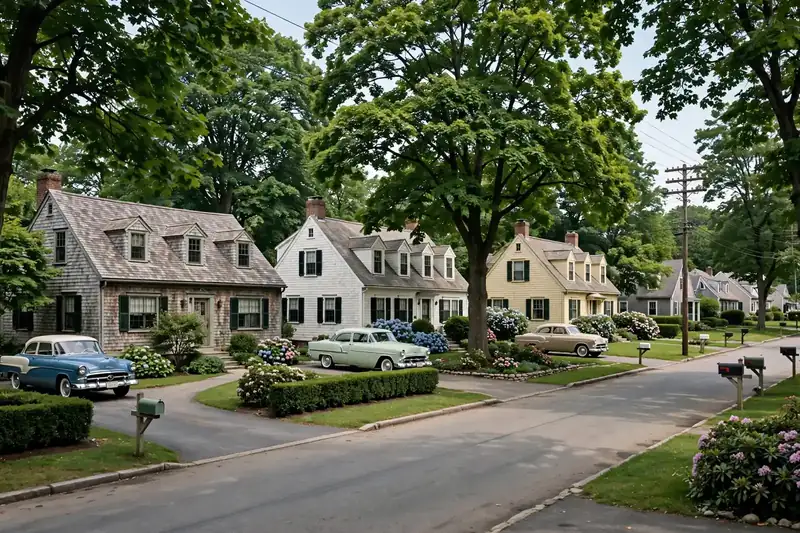
In short: Sewer line repair in North Beverly, MA 01915 starts with a camera inspection that reads the clay-to-cast-iron transition — many laterals are original 75-year-old clay at end of life. Call (833) 713-2101 to schedule.
Sewer Lines in North Beverly, MA 01915
North Beverly sits exactly on the clay-to-cast-iron transition. The typical home was built around 1949 — a 1940 Cape Cod at 170 Dodge Street, 1970s stock like 35 Tozer Road, mid-century homes throughout, with some large-lot estates such as the 3.68-acre Tozer Road property mixed in. That 1949 median means many laterals are original 75-year-old clay at the end of their service life, now under mature suburban tree canopies.
The suburban setting — inland, family-oriented, glacial till and drumlin terrain — shapes the failure mode: root intrusion at clay joints is the number-one call driver, the camera finds it in twenty minutes, and trenchless lining preserves the established landscaping and driveways that 1950s lots are known for. The North Beverly MBTA station, the elementary schools, the Cummings Center business park, and Beverly Hospital make this a settled, long-tenure neighborhood — where homeowners maintain rather than flip, and the sewer line gets the same long view.
Area Facts
- ZIP code
- 01915 (verified — listings at Tozer Rd and Dodge St)
- Housing stock
- Typical built ~1949; 1940 Cape Cods; mid-century homes; 1970s stock; some large-lot estates
- Era-typical pipe materials
- Clay tile transitioning to cast iron (~1949 stock); Orangeburg risk (1960s–70s); PVC (1980s+)
- Lots
- Suburban; mature tree canopies; established landscaping and driveways
- Soil & drainage
- Inland glacial till, drumlin terrain; full frost exposure; not coastal
- Landmarks
- North Beverly MBTA station (86-space lot); North Beverly Elementary (48 Putnam St); Beverly High School (100 Sohier Rd); Cummings Center; Beverly Hospital; Route 128
Sewer Challenges in North Beverly
End-of-life clay is the headline. Seventy-five-year-old clay-tile laterals have outlasted their joints: the mortar and packing are gone, segments have shifted with decades of frost heave in the till, and mature suburban tree canopies — the neighborhood's defining landscape — send roots into every opened bell. The camera footage is the classic end-of-life catalog: root masses at the joints, offsets, infiltration staining, the pipe's barrel still present but its joints surrendered. Root intrusion at clay joints is the number-one call driver here, and the camera confirms it in a single visit.
The transition era adds variety. As the stock crosses from clay to cast iron around the 1949 median, some laterals run the iron's corrosion chapter — scaling, tuberculation, pitting — while 1960s–70s homes carry the Orangeburg risk: fiber pipe ovalizing under the same root pressure and soil movement. A street of similar-looking Capes can hold three different pipe stories, which is why the camera reads each lateral individually rather than assuming from the architecture.
The long-tenure character cuts both ways. Homeowners who have lived with a line for decades sometimes normalize its decline — the gradually slowing drains, the annual clearing that ‘has always been needed' — without realizing the pipe has crossed from maintainable to failing. The inspection reframes that history factually: here is what the line looks like today, here is the trend, and here is the point where maintenance stops being enough.
How Sewer Service Works in North Beverly
The twenty-minute camera inspection is the service's signature here: the camera travels the lateral, the technician reads the transition-era pipe — clay bells, iron scale, fiber ovalization — and the homeowner sees the diagnosis live. Root intrusion, the dominant finding, is mapped joint by joint with the locating sonde, so the repair plan targets the actual entries rather than treating the whole line blindly.
For the classic finding — clay with joint failure but sound barrels — cured-in-place lining is the natural answer: it seals every root entry in one watertight structural barrier, installed from small access points that preserve the established landscaping and driveways 1950s lots are known for. Deformed Orangeburg routes to pipe bursting through two pits; corroded cast iron with sound shape lines well. Sound lines with buildup get professional cleaning, and the footage sets the maintenance interval honestly — managed decline with a visible trend, or the planned permanent fix.
Large-lot estates get the estate treatment: long runs mapped in full with the sonde, repairs planned around the grounds. Every visit ends with the forward look — what the line shows today, what the trend suggests, and which intervention fits the owner's long-tenure timeline. North Beverly maintains; the service is built for that.
Streets and Landmarks We Serve in North Beverly
Local specialists serve all of North Beverly: Tozer Road, Dodge Street, Sohier Road, Brimbal Avenue, and Putnam Street; the neighborhoods around the North Beverly MBTA station with its 86-space lot and MBTA bus 451 via Tozer Road; the school zones near North Beverly Elementary at 48 Putnam Street, Hannah Elementary at 41 Brimbal Avenue, and Beverly High School at 100 Sohier Road; the Cummings Center business park area; and the corridors toward Beverly Hospital and Route 128. Whether your Cape is 1940 or your colonial is 1970, the first step is the camera read: call (833) 713-2101 and see which side of the transition your line falls on.
The 1949 Transition: North Beverly's Clay-to-Iron Laterals
North Beverly sits exactly on the clay-to-cast-iron transition, and the town's own data says so: the typical Beverly home was built in 1949, and the North Beverly stock — 1940 Cape Cods like 170 Dodge Street, mid-century homes, 1970s stock like 35 Tozer Road, and large-lot properties like the 3.68-acre Tozer Road estate — straddles the changeover. That means a large share of laterals here are original 75-year-old clay tile at the end of their service life, now running beneath mature suburban tree canopies whose roots have had three-quarters of a century to find the joints. The 1960s and 70s homes add the Orangeburg watch; the 1980s and later builds run PVC.
Root intrusion at clay joints is the number-one call driver in this neighborhood, and the camera finds it in twenty minutes: root masses at the bells, infiltration staining, offsets where the till has shifted. Because the housing is suburban and settled — established landscaping, paved driveways, finished yards — the repair method matters as much as the diagnosis. Trenchless lining seals the joint system without disturbing the landscaping and driveways that 1950s lots are known for; where the pipe has deformed or collapsed, bursting replaces it along the same corridor through two small pits.
Inland North Beverly brings full freeze-thaw and frost exposure on glacial till and drumlin terrain, with no tidal influence — the failures here are age and roots, not groundwater. The North Beverly MBTA station's 86-space lot, the elementary schools on Putnam and Brimbal, Beverly High on Sohier Road, and the Cummings Center business park mark a family-oriented suburb where the sewer lines are as mid-century as the houses. From Tozer Road and Dodge Street to Sohier Road and the Anchor Point area, the inspection is quick and the fix preserves the property. Call (833) 713-2101.
Frequently Asked Questions
What does 'clay-to-cast-iron transition' mean for my line?
North Beverly's ~1949 median build year sits exactly where the industry shifted from clay tile to cast iron — so your lateral could be either, with different failure modes: clay fails at root-invaded joints, iron fails by internal corrosion. The camera identifies which material you have in one visit. Call (833) 713-2101 to find out.
Are my 75-year-old clay joints really at end of life?
Typically, yes — the joints' packing and mortar were never meant to last this long, and 75 years of frost heave, settlement, and root pressure have opened them. The barrel may still be sound, which is exactly the lining case: seal the joints, keep the pipe. The camera shows whether yours qualifies.
Will lining damage my established landscaping?
No — lining installs from small access points without trenching, which is why it is the natural answer for 1950s lots with mature landscaping and driveways. The established yard that defines the neighborhood stays exactly as it is.
We've had the line cleared every year — is that normal?
It is common but it is a signal: annual clearing means roots are re-entering through unsealed joints on a yearly cycle. Each clearing buys a year; lining the line ends the cycle. The camera footage shows whether your line has reached the point where the permanent fix beats another year of maintenance.
Do the large-lot estates need different service?
They need mapped service: long laterals are surveyed in full with the locating sonde, since a defect 150 feet out is invisible from the house. The trenchless plan is then built to the full map — lining or bursting the run without disturbing the grounds.
How does frost affect my lateral here?
Inland North Beverly gets full frost exposure, and the freeze-thaw cycle in the till works joints open a little more each winter — particularly at the foundation exit. It is a major contributor to the offset joints the camera finds. New work is buried and bedded against it; the inspection shows what it has done to the old.
Sewer Line Problems Don’t Wait. Neither Should You.
Call now and reach a local sewer line specialist serving Beverly, MA and nearby North Shore communities — 24/7.
(833) 713-2101Free to call · No obligation · 24/7 emergency line