
Sewer Maintenance in Beverly, MA
The cheapest sewer emergency is the one that never happens. Scheduled cleaning and camera checks keep roots, grease, and scale from becoming a crisis — call (833) 713-2101 to set your schedule.
- 24/7 emergency line
- Local North Shore specialists
- Camera inspection first
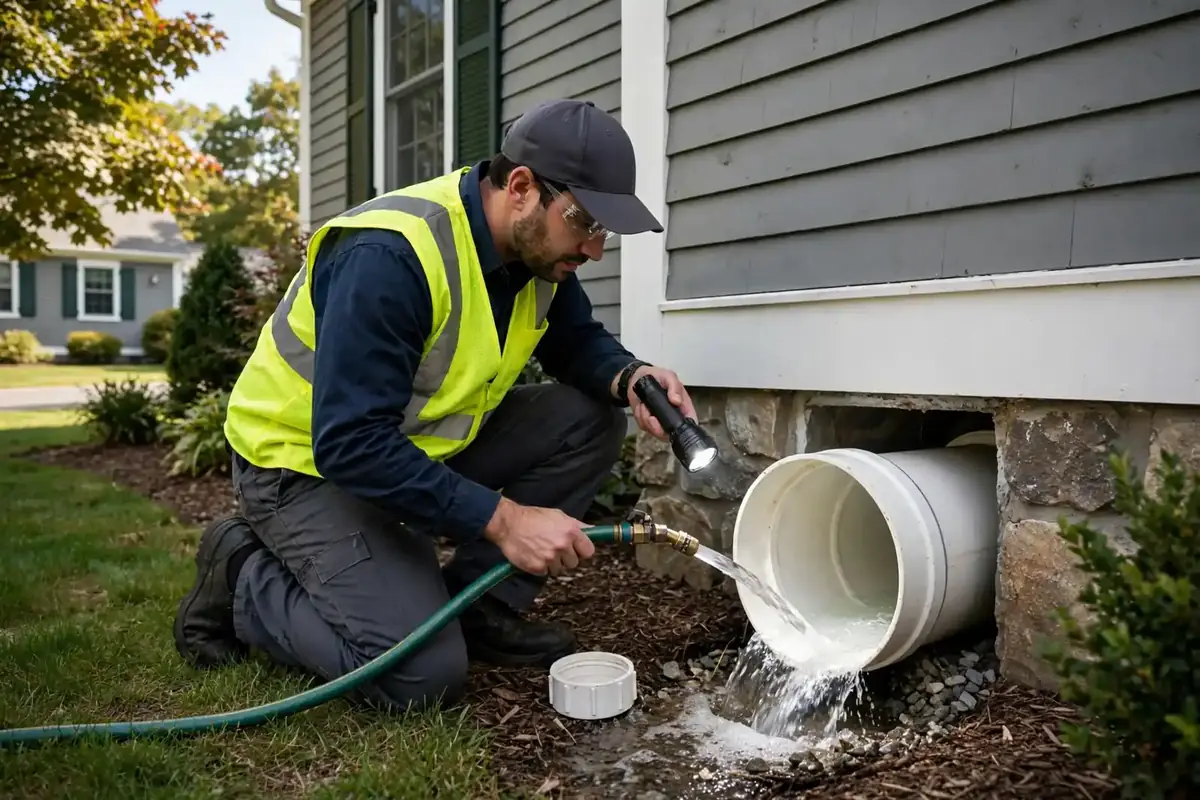
In short: Sewer maintenance in Beverly, MA 01915 means scheduled cleaning and camera checks that catch root intrusion and buildup before they become emergencies. Call (833) 713-2101 to set a schedule matched to your line's material and age.
Signs Your Line Would Benefit from Maintenance
Maintenance is for lines that work but are trending the wrong way. Drains that have gradually slowed over a year or two — not suddenly, but noticeably — suggest buildup accumulating toward a future blockage. A line that needed emergency clearing in the past is a prime maintenance candidate, because whatever clogged it once is already regrowing: roots through unsealed clay joints, grease re-plating on scoured walls. Seasonal patterns are telling: backups or slowdowns that arrive every spring with root growth, or every autumn with leaf and rain load, respond well to scheduled pre-season service. Older lines with known defects — a camera on file showing minor root intrusion or early joint offsets — are maintained, not ignored, because monitoring turns a surprise collapse into a planned repair. Properties with high consequences of failure — restaurants mid-service, multi-unit buildings, homes with finished basements — maintain precisely because a backup there costs more than the maintenance ever will. If any of this sounds familiar, the line is asking for a schedule.
What Maintenance Prevents
Scheduled maintenance interrupts the failure cycle at its cheapest point. Root intrusion is the classic example: fine roots entering a clay joint this spring become a matted blockage in two or three seasons. Clearing them on schedule — before they mat — keeps the line flowing and buys time to plan a permanent lining on your terms rather than in a crisis. Grease accumulation follows the same logic: jetting on schedule prevents the slow narrowing that ends in a Saturday-night backup. Scale and mineral buildup in cast iron roughen the interior and seed blockages; descaling on interval restores the bore. Just as valuable is what maintenance reveals: each camera check compares against the last, so progressive joint offsets, new infiltration, or a developing belly are caught while still manageable. Maintenance does not make an old pipe young — it makes its decline visible, predictable, and plannable, which is the next best thing.
How Sewer Maintenance Works, Step by Step
Baseline camera inspection
The program starts with a full camera survey that documents the line's material, condition, defects, and measurements. This baseline is the reference every future visit is compared against — without it, maintenance is just repeated cleaning.
Schedule matched to the line
Interval follows evidence: root-prone clay laterals might be serviced each growing season, grease-heavy lines on a volume-based cycle, sound lines on a multi-year camera check. The schedule is written down with what each visit includes — no vague promises.
Cleaning each visit
Roots are cut, grease and scale are jetted, debris is flushed — the line is restored to its full available capacity. The work is the same professional cleaning as a standalone visit, performed before trouble starts rather than after.
Camera comparison
The camera goes back in and the footage is compared against the baseline: are the roots worse, are offsets progressing, has infiltration increased? This comparison is where maintenance earns its keep — it converts invisible deterioration into a visible trend.
Plain-language report and planning
Each visit ends with a short report: what was done, what the camera showed versus last time, and whether anything needs planning — a lining in the next year, a spot repair to watch, or simply continued monitoring. No surprises, ever.
Equipment and Materials
Maintenance uses the same professional equipment as reactive service — the difference is timing, not tooling. Sectional cable machines with root-cutting heads clear root regrowth; hydro jetters with rotating and descaling nozzles scour grease and mineral buildup back to the pipe wall. Camera systems with recording and locating document each visit's findings against the baseline footage. Where root regrowth is aggressive, foaming root treatments may be applied after mechanical clearing to inhibit regrowth at the joints — a complement to cutting, not a substitute. Cleanout maintenance is part of the program: caps checked, risers kept at grade, access kept clear so every visit starts efficiently. The most important ‘equipment' is the file itself — dated footage, measurements, and notes that turn isolated visits into a managed program with a visible history.
Safety During Maintenance Visits
Maintenance visits follow the same safety protocols as any sewer work, scaled to the routine nature of the visit. Cleanout caps are opened with awareness of potential pressure; protective equipment guards against sewage exposure during clearing; jetter and cable-machine discipline — clear work zones, inspected hoses, controlled operation — applies every time, not just on emergencies. Because maintenance is scheduled, there is time to do it thoughtfully: the homeowner knows the visit is coming, fixtures stay off during the work window, and pets and children are kept clear as a matter of routine. Chemical root treatments, where used, are applied per their labeling with the line flushed as directed — and the household is told exactly when normal use resumes. Routine work done safely stays routine.
Local Factors: Maintaining North Shore Lines
North Shore lines reward maintenance more than most because their failure modes are gradual and visible on camera. Clay-tile laterals — Beverly Cove, North Beverly, Salem, Goat Hill, Essex, Marblehead — are the textbook maintenance case: roots will keep coming through the joints until the line is lined, and scheduled clearing plus camera comparison manages the interim for years while the lining decision is planned on the owner's timeline. Orangeburg lines in Peabody, Danvers, and Montserrat are maintained differently: gentle clearing with camera verification, watching for the deformation progression that signals replacement time — maintenance here is really managed decline toward a planned bursting project. Grease-prone lines near restaurant corridors get jetting on volume-based schedules. Coastal properties schedule with the water table in mind: a pre-winter check before freeze-thaw and a spring check after nor'easter season catch infiltration changes. Septic-fed properties in Topsfield, Wenham, and Essex fold tank pumping and inspection into the same program, because the building sewer and the disposal system age together.
Frequently Asked Questions
Is a maintenance plan worth it if my drains work fine?
If the camera baseline shows a sound, modern line with no defects, probably not — that line just needs attention if symptoms appear. Maintenance earns its keep on lines with known, manageable defects: root-prone clay joints, grease accumulation, aging cast iron. The baseline inspection tells you which category yours is in. Call (833) 713-2101 for that baseline.
How often should maintenance visits happen?
There is no universal interval — it follows the line. Root-prone clay laterals are often serviced each growing season; grease-heavy lines on cycles matched to their volume; lines with minor defects on annual or multi-year camera checks. The schedule is set from the baseline footage and adjusted as trends emerge, not from a generic calendar.
Can maintenance prevent a sewer line from ever failing?
No — maintenance manages decline; it does not reverse aging. What it prevents is surprise: the emergency backup, the collapse discovered too late, the repair forced at the worst moment. By making deterioration visible and gradual, maintenance converts crises into planned projects with time to choose the right fix.
What's included in a typical maintenance visit?
Professional cleaning matched to the line's needs — root cutting, jetting, descaling — followed by a camera pass compared against the baseline footage, and a short written report on what was done and what the camera showed. You will know exactly what each visit accomplished and what, if anything, needs planning.
Do you maintain commercial properties too?
Yes — and commercial lines often need it most. Restaurant grease lines, multi-unit common sewers, and office buildings with old clay or cast-iron laterals are maintained on schedules built around their volume and risk, usually during off-hours. The baseline-plus-comparison approach works the same at commercial scale.
Will maintenance visits damage my landscaping?
No. Maintenance works through existing cleanouts — no digging, no equipment across the lawn beyond carrying tools to the access point. If your property lacks a proper cleanout, installing one during the baseline visit makes every future visit faster, cleaner, and less expensive.
Sewer Line Problems Don’t Wait. Neither Should You.
Call now and reach a local sewer line specialist serving Beverly, MA and nearby North Shore communities — 24/7.
(833) 713-2101Free to call · No obligation · 24/7 emergency line