
Sewer Line Repair in Peabody, MA
Orangeburg ground zero: one symptom, two failures, and the camera as tiebreaker — Peabody needs bursting for fiber pipe and lining for clay, decided by footage. Call (833) 713-2101.
- 24/7 emergency line
- Local North Shore specialists
- Camera inspection first
In short: Sewer line repair in Peabody, MA 01960 starts with a camera inspection that tells the two failures apart — bursting for Orangeburg, lining for clay — because one symptom hides both. Call (833) 713-2101 to schedule.
Sewer Lines in Peabody, MA 01960
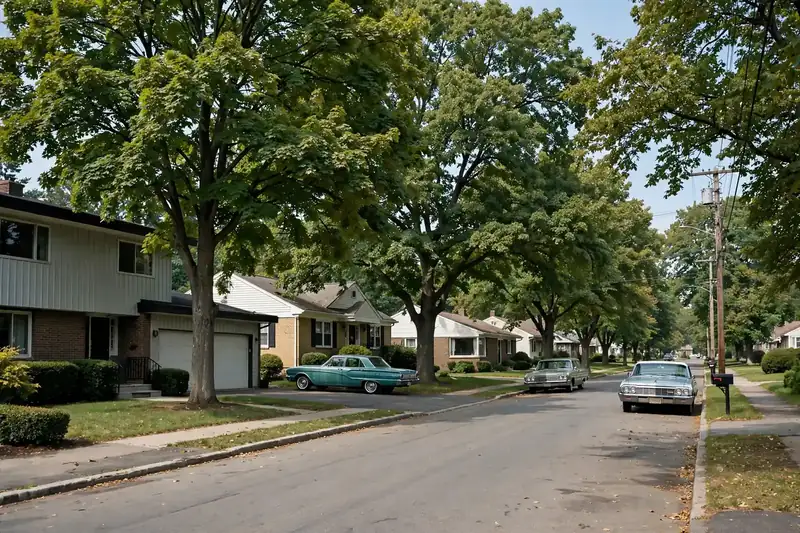
Peabody is Orangeburg ground zero in the fleet. The median home was built in 1966, and the big 1950s–1970s suburban cohort — split-entries like the 1960 example at 8 Temi Road, ranches across the subdivisions — sits on bituminized fiber-conduit laterals now sixty years into their deformation. Around them, 1880s–1920s in-town housing — an 1880 home at 128 Lowell Street, a 1920 at 128 Lynn Street, a 1927 at 14 Fairview — runs clay tile with cast iron, and 1988-plus custom colonials like Wildwood Estates brought PVC.
The result is the fleet's sharpest diagnostic split: two different pipe failures — ovalized Orangeburg and root-invaded clay — behind one symptom (slow drains plus sewage smell), where only the camera tells them apart. The inspection is sold as the diagnostic that decides between bursting for Orangeburg and lining for clay, because guessing wrong here wastes the entire repair. City sewer is typical across the sourced listings, and the granite beneath — Peabody Granite bedrock with glacial till over it — keeps excavation honest.
Area Facts
- ZIP code
- 01960 (verified; 01961 is PO Box)
- Housing stock
- Median built 1966; 1880s–1920s in-town housing; 1950s–70s split-entries and ranches; 1988+ custom colonials (Wildwood Estates)
- Era-typical pipe materials
- Clay tile + cast iron (pre-1940 in-town); Orangeburg and cast iron (1950s–70s — prime risk); PVC (1980s+)
- Basements
- Full basements common — 1927 home shows full/partially finished; 1988 colonial full unfinished with high ceilings
- Soil & drainage
- Peabody Granite bedrock with glacial till over it; low spots near the North River see seasonal wetness
- Landmarks
- Route 128/I-95 and Route 1 converge; Northshore Mall area; Brown's Pond; Brooksby Farm; MBTA bus connections
Sewer Challenges in Peabody
Orangeburg deformation at scale is the challenge. Thousands of 1950s–70s split-entries and ranches run fiber-conduit laterals that have spent sixty years ovalizing under root pressure and soil movement — and deformed fiber pipe cannot be lined, only burst or replaced. The camera footage from these subdivisions is unmistakable: egg-shaped bores, delaminating fiber layers, root masses exploiting the weakened walls. Misdiagnosing this as a lining candidate is the expensive mistake the inspection exists to prevent.
The in-town Victorians add the clay chapter: 1880s–1920s laterals with joint-separated clay, root intrusion at every bell, infiltration where the North River lowlands keep the ground seasonally wet. Full basements — common across eras, from the 1927 home's partially finished space to the 1988 colonial's high-ceilinged unfinished expanse — put living and storage space near the building sewer's exit, so backups arrive where they cost most. Peabody Granite under the till means any open excavation contends with rock, pricing trenchless methods as the rational default.
The diagnostic split defines the service: one symptom, two failures, and the camera as the tiebreaker. Slow drains plus sewage smell could be ovalized Orangeburg in a 1965 split-entry or root-matted clay in an 1890 Victorian — the footage shows which in minutes, and the entire repair plan pivots on that reading.
How Sewer Service Works in Peabody
The inspection is the tiebreaker, explicitly. The camera travels the lateral while the technician reads the two signatures: fiber walls with ovalization and delamination (bursting territory) versus bell joints with root masses and sound barrels (lining territory). The homeowner watches the distinction form on the monitor — the single most valuable twenty minutes in Peabody sewer service, because it prevents the wrong repair entirely.
Deformed Orangeburg routes to pipe bursting: the head fractures the fiber pipe outward while pulling in fused HDPE — optionally upsized — through two small pits, replacing the subdivision lateral in place without trenching the lawn. Clay with joint damage routes to cured-in-place lining: every root entry sealed in one watertight barrier, no excavation. Sound lines with buildup — grease near the Route 1 commercial corridor, scale in cast iron — get professional jetting and cleaning, with the footage setting an honest maintenance interval.
Basement-aware service is standard: full basements mean the inspection notes the sewer exit's relationship to finished space, and any repair plan accounts for protecting it. The granite reality is priced into every plan from the start — no surprises about rock, because the inspection maps depth and the methods avoid excavation where it matters.
Streets and Landmarks We Serve in Peabody
Local specialists serve all of Peabody: the in-town Victorian streets around Lowell Street, Lynn Street, and Fairview; the postwar subdivisions along Temi Road and the split-entry neighborhoods; the Wildwood Estates custom colonials; the Route 128/I-95 and Route 1 corridors including the Northshore Mall area; the Brown's Pond and Brooksby Farm areas; and the commuter belts with MBTA bus connections toward Salem and Beverly. Victorian or split-entry, the first step is the tiebreaker inspection: call (833) 713-2101 and let the camera decide between bursting and lining.
Orangeburg Ground Zero: Peabody's 1966-Median Stock
Peabody's 1966 median year built makes it Orangeburg ground zero for the service area. Thousands of 1950s-through-70s split-entries and ranches — the 1960 split-entry at 8 Temi Road is the archetype — run fiber-conduit laterals that are now ovalizing under root pressure and soil movement, sixty years into a material with a fifty-year temperament. Meanwhile the in-town Victorians — 1880 at 128 Lowell Street, 1920 at 128 Lynn Street, 1927 at 14 Fairview with its full basement and city sewer — add clay-tile root intrusion to the mix. Two different pipe failures, one symptom set: slow drains and sewage smells that could be either.
Only the camera tells them apart, and the distinction decides the method. Deformed Orangeburg cannot host a liner — it gets pipe-burst into a new pipe along the same corridor. Sound-but-root-invaded clay gets cleaned and lined, sealing the joints against the next fifty years of roots. Selling yourself the inspection as the diagnostic that decides between bursting and lining is the right frame, because guessing wrong means either lining a pipe that cannot hold it or bursting a pipe that could have been saved. The 1988-and-later colonials in developments like Wildwood Estates run PVC and mostly need maintenance — the camera confirms that too.
Peabody's ground adds its own note: the city sits on Peabody Granite bedrock with glacial till over it, so excavation can hit rock, and inland freeze-thaw with winter lows near 20 degrees heaves shallow laterals. Full basements are common across eras, putting living space near the building sewer's exit. From the Route 128, I-95, and Route 1 retail corridors to Brown's Pond, Brooksby Farm, and the commuter routes toward Salem and Beverly, the era of the house predicts the pipe. Call (833) 713-2101 and mention your home's decade — the likely failure mode is often known before the visit.
Frequently Asked Questions
Why do you call Peabody 'Orangeburg ground zero'?
Because the 1966-median housing stock puts the biggest 1950s–70s cohort — thousands of split-entries and ranches on bituminized fiber pipe — at exactly the age when Orangeburg deforms. No other town in the fleet concentrates the fiber-pipe risk like Peabody's subdivisions. Call (833) 713-2101 for the camera check.
How can the same symptom mean two different failures?
Slow drains plus sewage smell is what both ovalized Orangeburg and root-matted clay produce — the symptom is downstream of the cause. Only the camera distinguishes them: fiber walls with ovalization versus bell joints with root masses. The footage decides between bursting and lining in minutes.
Can my Orangeburg line be lined to save money?
No — deformed Orangeburg has lost the round, stable shape lining requires, and lining it would fail. This is the expensive mistake the inspection prevents: the camera shows the deformation clearly, and the honest answer is bursting or replacement, not a lining that cannot hold.
Will bursting work under my granite-heavy soil?
Yes — bursting follows the existing pipe's corridor without the open excavation that Peabody Granite makes costly. It is one of the method's biggest local advantages: the new HDPE line goes in along the old path while the rock stays undisturbed.
My basement is finished — does that change the plan?
It raises the stakes, which the plan accounts for: the inspection notes the sewer exit's relationship to the finished space, trenchless methods avoid disturbing it, and any work near it is staged to protect the finishes. A finished basement is also the best reason to inspect before symptoms start.
Do you service the Route 1 commercial corridor too?
Yes — commercial lines along the corridor get the same camera-first service with business-aware scheduling: off-hours inspections, grease-line jetting programs, and trenchless repairs that keep doors open. The diagnostic split applies at commercial scale as well.
Sewer Line Problems Don’t Wait. Neither Should You.
Call now and reach a local sewer line specialist serving Beverly, MA and nearby North Shore communities — 24/7.
(833) 713-2101Free to call · No obligation · 24/7 emergency line