
Emergency Sewer Repair in Beverly, MA
Sewage backing up? Don't wait and don't keep flushing. Call (833) 713-2101 now — the line is answered day and night, and a local specialist will guide your immediate steps and respond fast.
- 24/7 emergency line
- Local North Shore specialists
- Camera inspection first
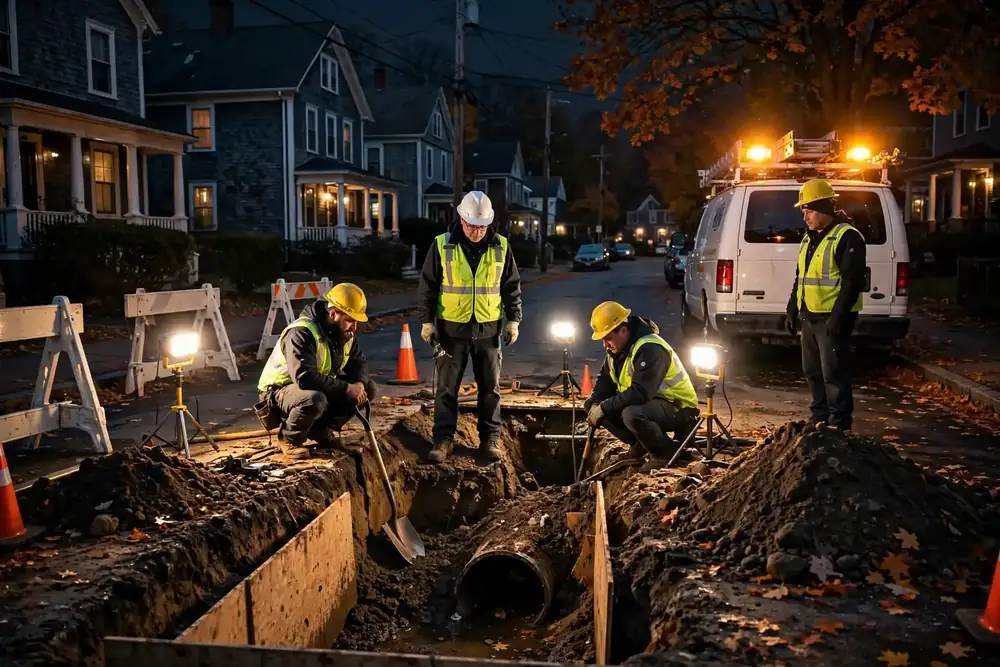
In short: Emergency sewer repair in Beverly, MA 01915 begins the moment you call (833) 713-2101: stop running water, avoid flushing, and a specialist will guide your immediate steps and arrange rapid response.
Signs You Have a Sewer Emergency
Not every sewer problem is an emergency, but some cannot wait. Raw sewage backing up into tubs, showers, or floor drains is the clearest emergency — every flush or running fixture adds volume behind the blockage and spreads contamination further into the home. Multiple fixtures failing at once after a period of normal operation suggests a sudden main-line blockage or collapse rather than a gradual clog. Outdoor signs count too: a rapidly forming sinkhole or settled trench above the sewer's path, sewage surfacing in the yard, or the unmistakable smell of sewage filling the basement. In winter, a line that worked yesterday and fails today may have frozen at a shallow spot or shifted with frost heave. During nor'easters, coastal homes sometimes see backups driven by surcharged municipal mains or groundwater overwhelming a compromised lateral — if sewage is entering the home, that is an emergency regardless of the cause. When in doubt, call (833) 713-2101 and describe what you see; a two-minute conversation determines whether you need someone tonight or can safely schedule a visit.
What Causes Sudden Sewer Failures
Sudden failures usually have slow causes that finally cross a threshold. A root mass that has been growing in a clay joint for years can mat solid in a single season, turning a sluggish line into a blocked one overnight. Orangeburg pipe, common in Beverly's 1950s–70s homes, can ovalize gradually and then collapse a section without warning. Heavy rain and nor'easters push groundwater through failed joints until the line runs full of infiltration, and if the municipal main surcharges, flow can reverse into the lowest fixtures of the home. Less dramatic causes still qualify: a child's toy flushed months ago can lodge at a joint offset and accumulate paper until the line seals shut; construction debris from a neighbor's project can enter through a broken section; grease from a holiday cooking marathon can congeal in a cold lateral. The common thread is that the line was already vulnerable — the emergency is simply the moment vulnerability became blockage.
What Happens When You Call, Step by Step
Immediate phone guidance
The call is answered around the clock. You will be asked which fixtures are affected, whether sewage is visible, and where your main cleanout is. You will be told to stop running water and avoid flushing — the single most important step, because every gallon adds to the backup. If you can safely reach your main water shutoff or cleanout, you will be talked through what to check.
Rapid on-site response
A specialist arrives with emergency equipment: sectional cable machines, jetters, pumps, and containment supplies. The first job is stabilization — relieving the blockage or pumping down the backup so contamination stops spreading. Only after the immediate crisis eases does diagnosis begin.
Camera diagnosis of the cause
Once flow is restored enough for the camera to travel, the line is inspected on the spot. You see the blockage's cause — roots, grease, a collapsed section, an offset joint — on the monitor. Emergency work without this step risks clearing a symptom while the cause waits to fail again next month.
Temporary or permanent fix, your choice
Sometimes the emergency clearing fully resolves a soft blockage and only monitoring is needed. When the camera shows structural failure, you will hear the permanent options — spot repair, lining, bursting, or replacement — with honest guidance on what can wait for a scheduled visit and what should not. Nothing is pressured; the footage speaks for itself.
Cleanup guidance and prevention
You will be advised on sanitizing affected areas, what to document for insurance, and how to prevent recurrence — whether that means a maintenance schedule, a backwater valve discussion, or simply knowing where your cleanout is for next time.
Equipment and Materials for Emergency Work
Emergency trucks carry the tools to handle whatever the camera finds. Sectional drain machines with root-cutting heads chew through root masses; high-pressure jetters blast grease, scale, and soft blockages while flushing debris downstream to the main. Submersible pumps move standing sewage out of basements and pits so work can proceed. Containment supplies — barriers, absorbents, disinfectants — limit the spread of contamination during the work. For the permanent fix that follows, the same trenchless arsenal applies: CIPP lining materials, bursting heads with HDPE replacement pipe, and SDR-35 PVC for open-cut sections. Temporary measures like mechanical plugs are used only to stabilize, never as a permanent answer. Everything deployed in an emergency is chosen to make the home safe tonight and the repair durable afterward.
Safety During a Sewer Emergency
Sewage is a biohazard, and emergency conditions amplify every risk. Keep people and pets away from backed-up areas — wastewater carries bacteria, viruses, and parasites that cause real illness. Do not wade into standing sewage to retrieve belongings; contaminated porous materials like carpet and drywall generally cannot be salvaged and should be handled with protection or by professionals. Electrical hazards deserve respect: water and electricity mix lethally, so if sewage has reached outlets, panels, or appliances, stay clear and mention it on the call. Ventilation matters when sewer gas is strong — open windows, avoid open flames, and leave the area if the smell is overwhelming. The responding crew works in protective equipment, disinfects work areas, and contains waste for proper disposal. Your job during the emergency is simple: stop the water, stay out of the sewage, and let the professionals handle the rest.
Local Factors: Emergencies on the North Shore
North Shore emergencies follow local patterns. Nor'easters drive the seasonal spike: storm surge and heavy rain surcharge older municipal mains and push groundwater through failed clay joints, so coastal homes from Beverly Cove to Swampscott see backups clustered around major storms. Winter brings frost-heave shifts that open already-weak joints and freeze shallow laterals, particularly in inland neighborhoods like Centerville and Montserrat. The housing stock shapes the failure mode: 1890s–1920s clay laterals in Goat Hill, Salem, and downtown Beverly fail at root-invaded joints; 1950s–70s Orangeburg in Peabody, Danvers, and Montserrat fails by sudden collapse; hillside and ledge-area lines in Gloucester and Marblehead fail where frost rocks shallow pipe against bedrock. Shared laterals in Salem's multi-family conversions and downtown Beverly buildings mean one household's emergency can originate next door — camera locating sorts that out before the wrong line gets excavated. And on septic-fed properties in Essex, Topsfield, and Wenham, an emergency backup may involve the tank or leach field rather than the building sewer alone, which changes the response entirely.
Frequently Asked Questions
What should I do first during a sewer backup?
Stop running water immediately — no flushing, no laundry, no dishwashing. Every gallon adds volume behind the blockage. Keep people and pets away from the sewage, and call (833) 713-2101. A specialist will talk you through immediate steps and arrange a rapid visit. Do not keep plunging; it will not clear a main-line blockage and can make the mess worse.
Is a sewer backup dangerous to my health?
Yes. Sewage carries bacteria, viruses, and parasites that cause gastrointestinal and other illnesses. Avoid contact, keep children and pets away, and do not handle contaminated porous materials without protection. Strong sewer gas also warrants ventilation and caution around open flames. Professionals work in protective equipment for good reason.
Can you come out at night or on weekends?
Yes — the line at (833) 713-2101 is answered around the clock, including nights, weekends, and holidays. Emergency visits prioritize stopping the damage: containing the backup, relieving the blockage, and stabilizing the situation. The permanent repair is then planned with full information from a camera inspection.
Will you have to dig up my yard in an emergency?
Not necessarily. Most emergencies are stabilized without digging — clearing the blockage, pumping down the backup, and camera-diagnosing the cause. Digging only enters the picture if the camera shows a collapse or break that demands it, and even then trenchless options often avoid open excavation. You will see the footage before any excavation is discussed.
Why did my line fail suddenly when it worked fine yesterday?
Most sudden failures are slow problems crossing a threshold: a root mass matting solid, an Orangeburg section finally collapsing, groundwater overwhelming weakened joints during a storm, or debris accumulating at an offset until the line seals. The camera inspection after stabilization shows which one it was — and whether a permanent fix or just monitoring is needed.
Should I call my insurance company before or after the repair?
Stabilize first, document everything with photos and notes as you go, and notify your insurer promptly — many policies require timely notice. Keep the camera footage and any written findings; they are the factual record of what failed and why. Coverage for sewer backups usually depends on a specific endorsement, so check your policy's backup coverage rather than assuming.
Sewer Line Problems Don’t Wait. Neither Should You.
Call now and reach a local sewer line specialist serving Beverly, MA and nearby North Shore communities — 24/7.
(833) 713-2101Free to call · No obligation · 24/7 emergency line