
Sewer Line Repair in Centerville, MA
Mid-century ranches and Capes on Orangeburg and clay — Centerville's lines fail by deformation and root pressure. Camera surveys map the damage, trenchless methods fix it cleanly. Call (833) 713-2101.
- 24/7 emergency line
- Local North Shore specialists
- Camera inspection first
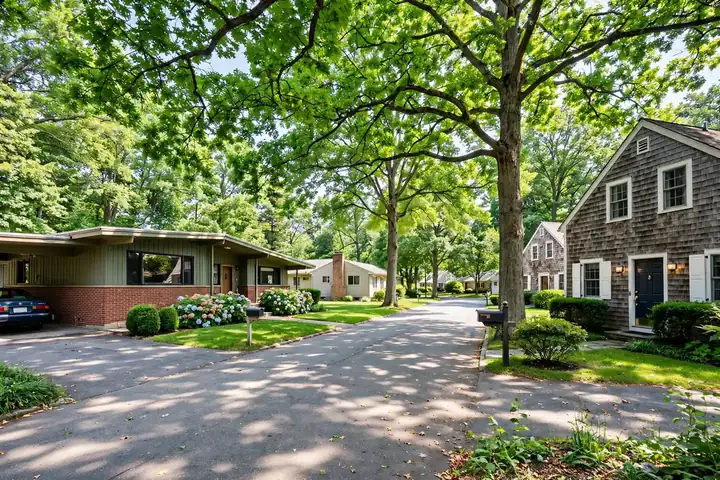
In short: Sewer line repair in Centerville, MA 01915 starts with a camera survey that maps root mass versus pipe deformation — the key distinction in this Orangeburg-era neighborhood. Call (833) 713-2101 to schedule.
Sewer Lines in Centerville, MA 01915
Centerville is Beverly's mid-century heart: Colonial Revivals, sprawling ranch-style homes, and stately Cape Cods on lots averaging just under half an acre, shaded by mature trees with manicured lawns. Some originals date to the early 19th century, and the Thaxton Heights subdivision adds early-2020s New Traditional construction — but the defining cohort is the 1950s–1970s boom, and that cohort's pipe tells the neighborhood's sewer story.
That story is Orangeburg. The bituminized fiber conduit of the postwar decades was laid under thousands of Centerville lawns, and sixty-plus years of root pressure and freeze-thaw soil movement have been ovalizing it ever since. Centerville is the textbook Orangeburg-and-root-intrusion zone: fiber laterals deformed by mature-tree roots on half-acre lots, with vitrified clay on the earliest homes adding joint-failure variety. Repairs here lead with a camera survey mapping root mass versus pipe deformation, because the fix — bursting for deformed Orangeburg, lining for sound-but-joint-damaged clay — depends entirely on which failure the footage shows.
Area Facts
- ZIP code
- 01915 (verified — 451 Essex St, Centerville listing)
- Housing stock
- Mid-1900s Colonial Revivals, ranch-style homes, Cape Cods; early-19th-century originals; Thaxton Heights 2020s infill
- Era-typical pipe materials
- Cast iron or Orangeburg (1950s–70s — prime suspect); vitrified clay (earliest homes); PVC (2020s infill)
- Lots
- Just under half an acre average; mature trees, manicured lawns
- Soil & drainage
- Inland glacial till, rocky New England soils; heavy root pressure; spring snowmelt saturates till
- Landmarks
- Essex St corridor, Long Hill estate, Alt Reservation, Centerville Elementary, North Beverly MBTA, Route 128/US 1 access
Sewer Challenges in Centerville
Orangeburg deformation is the headline. The fiber-conduit laterals under Centerville's ranches and Capes do not crack like clay or corrode like cast iron — they flatten. Decades of soil load press the pipe oval; mature tree roots, hunting the moisture inside, press from every side; freeze-thaw cycles in the inland till work the deformed pipe seasonally. The camera reveals the signature: a bore that has gone from round to egg-shaped, sometimes with the fiber layers delaminating, and root masses exploiting the weakened wall. Once ovalized, the pipe cannot be lined — lining needs a round, stable host — which makes accurate diagnosis critical: misdiagnosing deformed Orangeburg as a lining candidate wastes everyone's time.
The neighborhood's earliest homes add the clay-tile chapter: 19th and early-20th century originals with joint-separated clay laterals and classic root intrusion. And the mature canopy — the same trees that make Centerville's streets so appealing — is an active participant in every failure mode, pressing on Orangeburg and invading clay joints alike. Frost heave deserves mention: inland Centerville runs colder than the coast, and the freeze-thaw movement that shifts shallow laterals at the foundation exit is a real annual force here.
The good news is access. Half-acre lots with lawns — not ledge, not historic streetscapes, not condo common areas — mean repairs here are logistically straightforward. Two access pits for bursting, small access points for lining, and room to work: Centerville is where trenchless methods operate at their most efficient.
How Sewer Service Works in Centerville
The visit centers on the camera survey that the neighborhood's pipe stock demands. The camera travels the full lateral while the technician distinguishes the two failure signatures: root masses at clay joints (lining territory, if the barrel is sound) versus ovalization and delamination of Orangeburg (bursting territory, always). The footage is measured — deformation is quantified, not guessed — because the bursting-versus-lining decision rests on it. A locating sonde marks defect positions so the repair plan is surgical.
For deformed Orangeburg, pipe bursting is usually the right call: the bursting head fractures the fiber pipe outward while pulling in fused HDPE — optionally upsized — through two small pits, replacing the line in place without trenching the lawn. For clay laterals with joint damage but sound barrels, cured-in-place lining seals every joint against roots in one watertight barrier. Where the camera shows a sound line with mere buildup, professional cleaning with root cutting restores flow, and a maintenance schedule manages the regrowth cycle.
Homeowners get the footage and a plain-language read: what material the line is, how far it has deteriorated, which method fits, and what the property impact will be. On Centerville's workable lots, that impact is typically minimal — the neighborhood's ground is among the most repair-friendly in the fleet.
Streets and Landmarks We Serve in Centerville
Local specialists serve all of Centerville: the Essex Street corridor; the neighborhoods around Long Hill's historic estate and trails and the Alt Reservation; the blocks near Centerville Elementary; the Thaxton Heights subdivision; and the commuter belt by the North Beverly MBTA station with Route 128 and US 1 access. Downtown Beverly — the Cabot theater, the Mission Boathouse — is about four miles south, and Beverly Hospital about three. Wherever your ranch, Cape, or Colonial sits, the first step is the camera survey: call (833) 713-2101 and find out whether your line is a bursting case, a lining case, or just overdue for a cleaning.
Orangeburg Watch: Centerville's Mid-Century Laterals
Centerville's housing tells you where to look for trouble. The neighborhood is mostly mid-1900s — Colonial Revivals, sprawling ranch-style homes, and stately Cape Cods on just-under-half-acre lots, with a few early-19th-century originals and the early-2020s Thaxton Heights infill at the new end. That mid-century band is the Orangeburg era: fiber-conduit pipe installed in the 1950s through 1970s, now sixty-plus years old and well past the point where it holds its shape. On lots shaded by mature trees with manicured lawns, root pressure and freeze-thaw soil movement have been working those pipes for decades.
The camera is the arbiter here because the symptoms lie. Slow drains and sewage odors can mean root-blocked clay (cleanable, often lineable) or ovalized Orangeburg (deformed, not a lining candidate). The inspection maps root mass versus pipe deformation along the full run, and that distinction decides the method: pipe bursting replaces failed Orangeburg in place along the same corridor, while lining needs the round, stable host pipe that fiber conduit no longer provides. Guessing wrong means paying twice.
Centerville sits about three miles inland from the harbor on glacial till, so there is no tidal groundwater — but spring snowmelt saturates the rocky till, and inland frost runs deeper than on the coast, heaving shallow laterals at the foundation exit. Full basements are standard in the Colonial Revivals and Capes, which puts finished space close to the building sewer's exit. From the Essex Street corridor to Long Hill and the streets around Centerville Elementary, the pattern repeats: mature trees, mid-century pipe, and a camera survey that settles the question in one visit. Call (833) 713-2101 before the spring melt exposes the weak joints.
Frequently Asked Questions
What is Orangeburg pipe and why is it a problem in Centerville?
Orangeburg is bituminized fiber conduit installed widely from the 1950s through the 1970s — exactly Centerville's boom era. It softens and ovalizes under decades of soil load and root pressure, eventually deforming beyond any repair but replacement. A camera inspection shows its true shape; deformed Orangeburg cannot be lined, only burst or replaced. Call (833) 713-2101 for the inspection.
How can you tell if my line is Orangeburg or clay without digging?
The camera shows it directly: clay tile has visible bell joints every few feet, while Orangeburg is a continuous fiber pipe that reveals its identity through ovalization and layered delamination. The house's era is the first clue — 1950s–70s suggests Orangeburg — but the footage confirms it definitively.
Will pipe bursting destroy my lawn?
No. Bursting needs only two small access pits — the lawn between them stays intact, as do driveways, plantings, and walkways above the run. On Centerville's half-acre lots there is ample room to position the pits well clear of anything you value. The disturbed pits are backfilled, compacted, and restored.
My line was cleaned last year and it's slow again — is that normal?
For deformed Orangeburg or root-invaded clay, yes — cleaning removes the blockage, not the deformation or the open joints, so symptoms return on a cycle. Recurring slowdowns within a year or two mean the line needs camera diagnosis and a permanent fix (bursting or lining) rather than another cleaning.
Does the mature tree canopy really damage sewer lines?
Actively. Mature roots hunt the constant moisture of a sewer line, entering through clay joints and pressing on Orangeburg walls. On Centerville's shaded half-acre lots, root pressure is a primary force in both failure modes — which is why the camera survey maps root mass as carefully as pipe shape.
Should I worry about frost heave affecting my line?
Inland Centerville runs colder than the coast, and freeze-thaw movement in the till does shift shallow laterals — particularly at the foundation exit. Proper burial depth and bedding protect new installations; for existing lines, the camera shows whether heave has opened joints or shifted segments, and the repair plan addresses it.
Sewer Line Problems Don’t Wait. Neither Should You.
Call now and reach a local sewer line specialist serving Beverly, MA and nearby North Shore communities — 24/7.
(833) 713-2101Free to call · No obligation · 24/7 emergency line