
Sewer Line Repair in Danvers, MA
Victorians on clay, subdivisions on Orangeburg — Danvers holds every pipe era on the same streets. Camera inspections reveal your line's era, and the fix follows the footage. Call (833) 713-2101.
- 24/7 emergency line
- Local North Shore specialists
- Camera inspection first
In short: Sewer line repair in Danvers, MA 01923 starts with a camera inspection that answers the era question — collapsed Orangeburg or root-invaded clay — because the fix depends on it. Call (833) 713-2101 to schedule.
Sewer Lines in Danvers, MA 01923
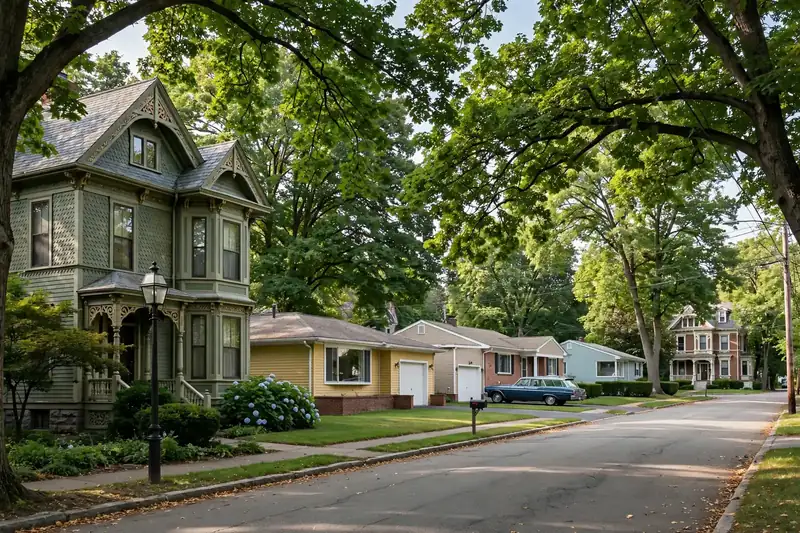
Danvers straddles every sewer era at once. The typical home was built around 1960, yet nearly a quarter of the housing stock dates to 1939 or earlier — 1880s–1900s Victorians like the 1885 example at 178R Maple Street stand alongside 1950s–1980s suburbia. That mix means a Danvers street can hold collapsed Orangeburg on one lot and root-invaded clay on the next, with post-1980 PVC as the quiet bright spot.
The practical consequence is that camera inspections here are pitched as era discovery: find out which era your pipe belongs to, because the fix path — bursting for deformed Orangeburg, lining for joint-damaged clay, cleaning for sound pipe with buildup — is entirely era-dependent. Danvers has all three eras on the same streets, so no diagnosis here is ever made from the surface. Town sewer serves the denser areas; outlying lots merit per-address verification.
Area Facts
- ZIP code
- 01923 (verified — USPS preferred city Danvers)
- Housing stock
- Typical home built ~1960; 23.2% built 1939 or earlier; 1880s–1900s Victorians plus 1950s–1980s suburbia
- Era-typical pipe materials
- Clay tile + cast iron (pre-1940); Orangeburg risk (1950s–60s boom); PVC (post-1980)
- Basements
- Full basements common across eras
- Soil & drainage
- Inland glacial till, clay loams, scattered wetlands; seasonal saturation near the Danvers River lowlands
- Landmarks
- Route 128/I-95 and US 1 corridors; Danversport waterfront; Endicott Park; Routes 1A/35/62 to Beverly/Salem
Sewer Challenges in Danvers
Danvers' challenge is duality. The 1950s–1970s subdivisions run the Orangeburg risk: fiber-conduit laterals now sixty-plus years old, ovalizing under root pressure and soil movement, prone to the sudden collapse that turns a working line into an emergency overnight. The pre-1940 village stock runs the clay-tile risk: joints opened by eight or nine decades of settlement, root intrusion at every bell, infiltration where the water table rises. A single service call can encounter either — or both, on the same block.
The inland setting adds its own forces. Full freeze-thaw exposure with winter lows around 20°F works shallow laterals every season; frost heave in the till shifts pipes at the foundation exit and opens already-weak joints. Low-lying areas near the Danvers River see seasonal saturation that feeds infiltration through failed joints. Nor'easter snow loads add the winter stress that coastal neighborhoods feel as surge — different water, same pressure on old pipe.
The diagnostic trap here is assuming the era from the house alone. Renovations, additions, and partial replacements mean a 1960 home can sit on a 1990 PVC lateral — or a 1920 home on its original clay. Danvers rewards the camera-first discipline more than almost anywhere: the footage, not the facade, determines whether the line needs bursting, lining, cleaning, or nothing at all.
How Sewer Service Works in Danvers
The visit is built around era discovery. The camera travels the lateral while the technician reads the pipe's biography: bell joints and root masses say clay; continuous fiber walls with ovalization say Orangeburg; smooth plastic says a previous replacement already solved the problem. Each finding routes to its fix — and the homeowner watches the era reveal itself on the monitor, which makes the recommendation that follows feel obvious rather than sold.
For deformed Orangeburg, pipe bursting replaces the line in place through two small pits — the right answer for the postwar subdivisions, where trenching every lawn would be absurd. For clay with joint damage but sound barrels, cured-in-place lining seals every joint against roots and infiltration without disturbing the property. For sound lines with buildup — grease near commercial corridors, scale in cast iron — professional cleaning restores capacity, and a maintenance schedule keeps it there. The through-line is proportionality: the fix matches the footage, era by era, lot by lot.
Danvers' corridor geography helps logistics: Route 128/I-95 and US 1 put every neighborhood within quick reach, and the town's mix of village and suburb means most properties offer workable access for trenchless equipment. Response is fast, diagnosis is visual, and the plan is specific to the pipe under your lawn — not your neighbor's.
Streets and Landmarks We Serve in Danvers
Local specialists serve all of Danvers: the village-area streets with Victorian stock around Maple Street; the postwar subdivisions along the Route 128/I-95 and US 1 corridors; the Danversport waterfront area; the neighborhoods near Endicott Park; and the commuter routes along 1A, 35, and 62 toward Beverly and Salem. Whether your home is an 1885 Victorian or a 1975 split-level, the first step is the same — call (833) 713-2101 for the camera inspection that tells you which era your pipe belongs to and what it needs.
Which Era Is Your Danvers Pipe?
Danvers is a town where the sewer line's age is a genuine question, not a guess. The typical Danvers home was built around 1960, but nearly a quarter of the housing stock dates to 1939 or earlier — 1880s and 1900s Victorians like the 1885 example on Maple Street still stand alongside 1950s-through-80s suburbia. That means three pipe eras share the same streets: vitrified clay tile with cast-iron DWV on the pre-war homes, Orangeburg fiber conduit on the 1950s and 60s boom cohort, and PVC on post-1980 construction. Each fails differently, and each demands a different fix.
The practical consequence is that the fix path in Danvers is entirely era-dependent. A root-invaded clay lateral on an older village street is often a lining candidate — seal the joints, keep the pipe. An ovalized Orangeburg lateral in a 1962 subdivision wants pipe bursting — the deformed fiber pipe cannot host a liner, so it gets replaced in place. A camera inspection is the only way to know which street-era you are living with, because the symptoms overlap: slow drains, gurgling, and sewage smells can come from either failure. The inspection should be pitched to yourself as a simple question: find out which era your pipe is.
Local conditions shape the details. Danvers sits inland on glacial till and clay loams with scattered wetlands — no tidal groundwater, but low-lying areas near the Danvers River see seasonal saturation, and full New England freeze-thaw with winter lows near 20 degrees works every joint. Denser neighborhoods run town sewer while outskirts properties may be septic, so confirming the disposal type is part of the first visit. From the Route 128 and US 1 corridors to Danversport and the streets around Endicott Park, the rule holds: the house's birthday predicts the pipe, and the camera confirms it. Call (833) 713-2101 and mention your home's era — the likely pipe material is often predictable before anyone digs.
Frequently Asked Questions
Why does the pipe's era matter so much in Danvers?
Because Danvers has all three eras on the same streets — pre-1940 clay, 1950s–70s Orangeburg, post-1980 PVC — and each fails differently and fixes differently. Deformed Orangeburg must be burst, not lined; joint-damaged clay lines beautifully; sound PVC usually just needs cleaning. The camera inspection reveals the era in one visit. Call (833) 713-2101 to schedule.
My house was built in 1960 — does that mean Orangeburg?
Probably, but not certainly. Renovations and partial replacements mean the pipe's era can differ from the house's. The camera shows the actual material — fiber walls with ovalization confirm Orangeburg; bell joints confirm clay; smooth plastic means someone already replaced it. Never assume from the facade.
Can Orangeburg be lined instead of replaced?
No — once Orangeburg has ovalized, it has lost the round, stable shape that lining requires. Lining a deformed fiber pipe fails. Pipe bursting replaces it in place through two small pits, which is the right method for Danvers' postwar subdivisions.
Do you serve the Danversport waterfront area?
Yes. Waterfront-area lines get the same camera-first service with attention to the local water table and any tidal influence on infiltration. The inspection is timed and interpreted for the ground beneath the property.
What if my Danvers home is on septic, not town sewer?
Outlying Danvers lots can be septic, so the disposal type is verified per address before work is planned. A building sewer feeding a septic tank is a different job than a town-sewer lateral — the tank and disposal field enter the picture, and the camera maps the line all the way to the tank.
How fast can you respond in Danvers?
The Route 128/I-95 and US 1 corridors put all Danvers neighborhoods within quick reach, and the emergency line at (833) 713-2101 is answered around the clock. Stabilization comes first for backups; the camera diagnosis follows once the immediate crisis eases.
Sewer Line Problems Don’t Wait. Neither Should You.
Call now and reach a local sewer line specialist serving Beverly, MA and nearby North Shore communities — 24/7.
(833) 713-2101Free to call · No obligation · 24/7 emergency line