
Sewer Line Repair in Topsfield, MA
The septic-town wildcard: Topsfield demands disposal-type verification first, then camera-mapped trenchless work on long rural runs. Call (833) 713-2101.
- 24/7 emergency line
- Local North Shore specialists
- Camera inspection first
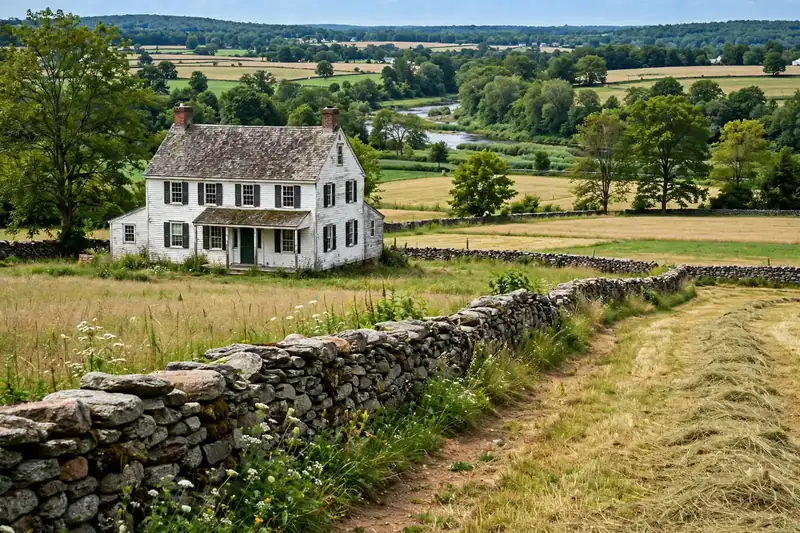
In short: Sewer line repair in Topsfield, MA 01983 starts by establishing septic versus sewer — many homes are private septic — then a camera-and-locating survey of the long rural run. Call (833) 713-2101 to schedule.
Sewer Lines in Topsfield, MA 01983
Topsfield is the septic-town wildcard. The median home was built in 1967 on rural-suburban lots — classic New England colonials, 1956 ranches like 163 Ipswich Road, 2004 farmhouses, Coolidge Estate parcels — with about 90 percent owner-occupied housing. But the defining fact is below grade: multiple sourced listings show private sewerage and septic (29 River Road, 83 Perkins Row with its new septic noted), which means many Topsfield homes are not on town sewer at all.
The pipe story follows the era: 1960s median means cast iron and Orangeburg laterals as the main risk, pre-1960 farmhouses on clay tile, 2000s construction on PVC. The rural setting — drumlin fields, glacial till, the Ipswich River and its Mass Audubon wildlife sanctuary, deeded river easements, 33.8-acre parcels — means long runs through pasture and woods with seasonal high water tables near the river. Here the service is septic-aware from the first question: establish the disposal type, map the full system, then repair the right thing.
Area Facts
- ZIP code
- 01983 (verified — LoopNet, RealtyHop, MLS listings at River Rd/Ipswich Rd)
- Housing stock
- Median built 1967; New England colonials; 1956 ranches; 2004 farmhouses; Coolidge Estate parcels; 90% owner-occupied
- Era-typical pipe materials
- Cast iron and Orangeburg (1960s median — main risk); clay tile (pre-1960 farmhouses); PVC (2000s)
- Sewer vs septic
- CRITICAL: many homes private septic (sourced listings) — verify disposal type per address
- Soil & drainage
- Drumlin fields, glacial till; Ipswich River and wildlife sanctuary; seasonal high water table near river; flood zone AE on river parcels
- Landmarks
- Ipswich Rd, River Rd, Perkins Row, Boxford Rd; Ipswich River Wildlife Sanctuary; Coolidge Estate; Masconomet Regional schools
Sewer Challenges in Topsfield
The septic wildcard is the challenge that reorders everything. A failed building sewer feeding a private septic tank is a different job than a town-sewer lateral: the tank, distribution box, and leach field all enter the picture, and repairing the pipe while ignoring a failing system solves half the problem. In Topsfield, the disposal type is established first — per address, from records and assessment — because assuming town sewer here is the expensive mistake. The camera then maps the building sewer all the way to the tank, and the full system is evaluated together.
The 1960s pipe stock adds the material chapter: cast-iron and Orangeburg laterals now approaching sixty years old, the fiber pipe ovalizing under root pressure and soil movement, the iron scaling and corroding. Pre-1960 farmhouses contribute clay tile with the classic joint failure. Long rural runs — 150 feet through pasture and stone-wall country to reach the tank or the street — multiply every joint, every root entry, every infiltration point along their length.
The river corridor adds the water chapter. The Ipswich River and its sanctuary lands keep the seasonal water table high near the river, with flood zone AE on the river parcels — saturated till pressing on every joint, spring flooding adding peaks. Deeded river easements constrain where work can happen. Topsfield's lines contend with water, distance, and the septic question simultaneously — which is why the service here is the most systematically planned in the fleet.
How Sewer Service Works in Topsfield
Septic-aware, from the first question. The visit opens by establishing the disposal type — town sewer or private septic, confirmed per address — and the entire plan branches from that answer. On septic-fed properties, the camera maps the building sewer to the tank with the locating sonde, the tank's condition is assessed, and the distribution and leach field enter the evaluation: the system is treated as one, because it fails as one. On town-sewer properties, the lateral is inspected end to end with the river corridor's water table in mind.
Long rural runs get the estate treatment: full-length mapping with the sonde, since a defect 150 feet out is invisible from the house, and trenchless plans built to the full map — lining that seals the run's joints without trenching pasture and stone walls, or bursting that replaces it along the same corridor. Deformed Orangeburg routes to bursting; joint-damaged clay routes to lining; sound pipe gets cleaning and an honest maintenance interval. The river's seasonal pattern informs scheduling: inspections timed with wet conditions when infiltration is the suspected finding.
Every Topsfield plan is a system plan, not a pipe plan: the building sewer, the tank or town connection, the disposal field where applicable, and the water around all of it. That completeness is what the septic wildcard demands.
Streets and Landmarks We Serve in Topsfield
Local specialists serve all of Topsfield: Ipswich Road, River Road, Perkins Row, and Boxford Road; the neighborhoods around the Ipswich River Wildlife Sanctuary; the Coolidge Estate parcels; the village center and the Masconomet Regional school zones; and the rural roads toward Hamilton/Wenham and North Beverly stations, six to seven miles out. Colonial, ranch, or farmhouse — septic or sewer — the first step is the same: call (833) 713-2101, establish the disposal type, and schedule the camera-and-locating survey of the full run.
Septic-First: Topsfield's Rural Sewer Reality
Topsfield is the septic-town wildcard, and the first question on every visit is disposal type. The rural-suburban town — median year built 1967, ninety percent owner-occupied, classic New England colonials on large lots — runs a housing stock where private sewerage is common: 83 Perkins Row's 1961 colonial notes a new septic, 29 River Road's 2004 farmhouse lists private sewerage, and the 1956 ranch at 163 Ipswich Road sits in the same pattern. Many Topsfield homes are not on town sewer at all, and a failed building sewer feeding a septic tank is a different job than a town-sewer lateral — different routing, different components, different repair logic.
The pipe eras follow the town's growth. The 1960s-median stock means cast iron and Orangeburg laterals are the main risk on the subdivision homes; pre-1960 farmhouses run clay tile; 2000s construction runs PVC. The Coolidge Estate parcels and the big river-frontage lots add length: building sewers here can run 150 feet or more through pasture, stone walls, and woodland to reach a tank or the road. On those long rural runs, camera inspection with locating maps the full system — house to tank, tank to distribution box, D-box to leach field — before any repair, because the failure could be in the building sewer, the tank baffles, or the field itself, and each has a different fix.
The Ipswich River shapes the ground: the Mass Audubon wildlife sanctuary, deeded river easements, seasonal high water tables, and flood zone AE on the river parcels. Saturated ground works joints open and admits infiltration; trenching through pasture and historic stone walls is the last resort. Pipe bursting a 150-foot Orangeburg run to the tank beats open-cutting it, and lining seals a sound clay run against the river's pressure. From Ipswich Road and River Road to Perkins Row and the Masconomet school corridors, verify the disposal type first. Call (833) 713-2101 with your address ready.
Frequently Asked Questions
How do I know if my Topsfield home is on septic or town sewer?
Many Topsfield homes are private septic — sourced listings confirm it — so the disposal type is verified per address from your property records, water/sewer bills, or the initial assessment. It is established before any repair is planned, because a septic-fed line is a different job. Call (833) 713-2101 and it will be confirmed.
If I have septic, do you service the tank too?
The service evaluates the full system: the camera maps the building sewer to the tank, the tank's condition is assessed, and distribution and leach field issues enter the plan. The building sewer and the disposal system are treated as one because they fail as one — repairing the pipe while ignoring the tank solves half the problem.
Can trenchless methods handle a 150-foot run to the tank?
Yes — length is where trenchless methods save the most. Lining seals the run's joints from small access points; bursting replaces it along the same corridor. Trenching 150 feet through pasture, stone walls, and river-easement land is the alternative nobody wants. The camera survey measures the exact run first.
Does the Ipswich River affect my line?
Near the river corridor, yes — the seasonal high water table presses on every joint, and flood-zone parcels see spring peaks. Inspections are timed with wet conditions when infiltration is suspected, and lining is specified as the watertight answer where joints have failed.
What pipe material is my 1967 home likely to have?
The 1960s median points to cast iron and Orangeburg as the main risks — fiber pipe ovalizing, iron scaling — with clay tile on pre-1960 farmhouses and PVC on 2000s construction. The camera identifies the actual material in one visit; era predicts, footage confirms.
Will work disturb my pasture or the river easement?
The plan is designed not to. The mapped survey shows the pipe's path relative to pasture, stone walls, and easement boundaries, and trenchless access points are sited to comply — small footprint, no trenching through protected ground. Restriction-compatible methods are the default here.
Sewer Line Problems Don’t Wait. Neither Should You.
Call now and reach a local sewer line specialist serving Beverly, MA and nearby North Shore communities — 24/7.
(833) 713-2101Free to call · No obligation · 24/7 emergency line