
Sewer Line Repair in Goat Hill, MA
An 1890s waterfront grid with no room to dig — Goat Hill needs camera-mapped, trenchless sewer work that spares the block's parking and access. Call (833) 713-2101.
- 24/7 emergency line
- Local North Shore specialists
- Camera inspection first
In short: Sewer line repair in Goat Hill, MA 01915 starts with a camera inspection that sorts out whose lateral is whose on the dense shared lots — then trenchless repair that spares the block's only parking. Call (833) 713-2101 to schedule.
Sewer Lines in Goat Hill, MA 01915
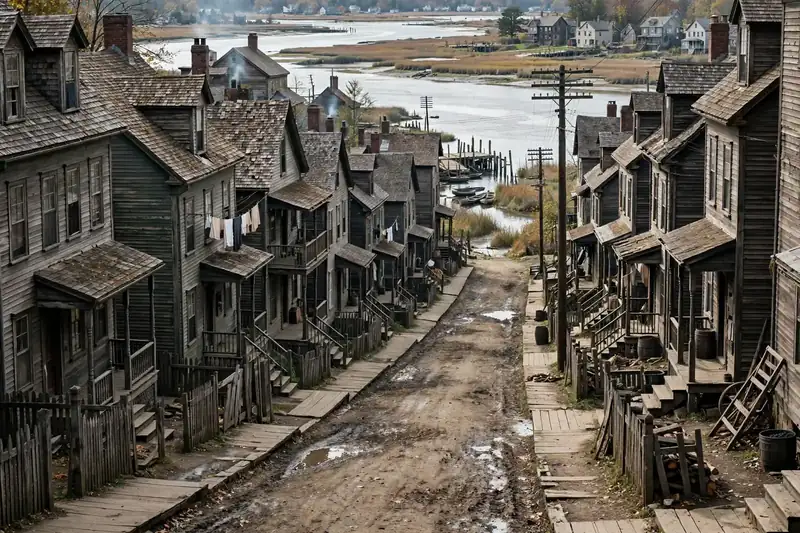
Goat Hill is one of Beverly's oldest working-class neighborhoods: settled in 1839 with the railroad, built out in the 1890s, with Irish and Italian immigrant roots still visible in the dense 2–3 family houses and converted condos. It is a waterfront peninsula pocket — bounded by the Bass River on the west, the ocean on the south, Rantoul Street on the east, and River and School Streets on the north — and its sewers reflect both its age and its geography.
The 1890s–1920s dense housing runs on clay-tile laterals with cast-iron drain piping, many of them shared or closely spaced on tight lots with minimal setbacks. The Bass River pushes the water table up; the ocean hems the southern edge. Condo conversions — like the 2-bedroom units at 16 School Street — likely retain original clay at the curb beneath modern interiors, and the 2021-built Sedna waterfront apartments at 16 Congress Street brought new PVC to the water's edge. With almost no room to dig between buildings, the approach here is camera-first, then trenchless: locate exactly whose lateral is whose, then line it without tearing up the only parking and access the block has.
Area Facts
- ZIP code
- 01915 (verified — city-data neighborhood profile; condos at 16 School St)
- Housing stock
- Dense 1890s 2–3 family houses; converted condos; 2021-built Sedna waterfront apartments (16 Congress St)
- Era-typical pipe materials
- Clay tile laterals + cast-iron DWV (1890s–1920s); original clay at curb in condo conversions; PVC (2021 construction)
- Soil & drainage
- Waterfront peninsula pocket; Bass River west, ocean south; shallow water table; possible historic fill near the river
- Constraints
- Narrow streets, shared driveways, minimal setbacks, condo association approvals
- Landmarks
- School St, River St, Rantoul St, Congress St; Bass River; Gillis Park (40 Porter St); blocks from downtown and commuter rail
Sewer Challenges in Goat Hill
Density is the defining challenge. Clay laterals run under narrow streets with shared driveways and minimal setbacks — there is almost no room to excavate between buildings, and what open ground exists is often the block's only parking. The 1890s pipe itself is past its design life: joints opened by 130 years of settlement, root intrusion from street trees, groundwater infiltration where the Bass River-influenced water table meets failed bells. Condo conversions layer a legal question atop the physical one: with original clay at the curb beneath converted interiors, and associations governing common elements, every repair needs documented answers about whose line is whose.
Water presses from two sides. The Bass River bounds the west with its shallow, river-influenced water table; the ocean bounds the south with storm-surge exposure during nor'easters. Infiltration through failed joints is a constant background condition, not just a storm event — the camera often shows weeping joints even in dry weather. Bass River flooding can saturate the low blocks, adding seasonal peaks to the background seep.
The neighborhood's working-class history is written in the pipe: dense worker housing built fast in the 1890s, laterals laid to the standards of the day, converted and subdivided over the decades without documentation. Camera inspection with locating is the only way to read that history accurately — tracing each lateral, marking each defect, and establishing responsibility before any repair is planned.
How Sewer Service Works in Goat Hill
The inspection here does double duty: diagnosing the pipe and mapping the ownership. The camera travels each accessible lateral while the locating sonde marks its path and defects against the tight lots above — establishing which line serves which building, where shared sections run, and what falls to the association versus the unit owner. Findings are documented for sharing with boards and neighbors, because Goat Hill repairs are inherently collective.
Trenchless lining is the natural fit: it renews clay laterals from small access points without tearing up the narrow streets, shared driveways, or the block's limited parking — sealing joints against roots and the river-influenced water table in one watertight barrier. Where lines have deformed beyond lining, pipe bursting replaces them through two pits positioned to avoid structures and shared access. Open-cut is the last resort, planned surgically and only where the path demands it. Coordination — neighbor notification, association approval, equipment staging on narrow streets — is handled upfront as part of every plan.
For the 2021 Sedna-era construction, the story is simpler: modern PVC on the waterfront edge, where service means maintenance and inspection rather than rehabilitation. The camera confirms the material either way — era is never assumed from the facade.
Streets and Landmarks We Serve in Goat Hill
Local specialists serve the full Goat Hill pocket: School Street and River Street along the northern edge; the Rantoul Street corridor on the east; Congress Street and the Sedna waterfront buildings; the Bass River–side blocks; Gillis Park at 40 Porter Street and the surrounding community; and the streets stepping toward downtown Beverly and the commuter rail, blocks away. Condo owners, association managers, and owners of the neighborhood's historic 2–3 family houses all start the same way — call (833) 713-2101 for the camera-and-locating inspection that maps the lines, the defects, and the responsibilities.
Tight Lots and Shared Lines on Goat Hill
Goat Hill is one of Beverly's oldest working-class neighborhoods, and its sewers show the density of 130 years of building. Settled in 1839 with the railroad and built out in the 1890s by Irish and Italian immigrant families, the Hill is a tight grid of 19th-century two- and three-family houses and converted condos — like the two-bedroom at 16 School Street — packed between the Bass River on the west, the ocean on the south, Rantoul Street on the east, and River and School Streets on the north. The 2021-built Sedna waterfront apartments at 16 Congress Street run modern PVC, but the surrounding blocks run 1890s-to-1920s clay tile, often on shared lots with minimal setbacks.
Shared laterals are the Hill's signature complication. On tight lots with shared driveways, nobody's records reliably show where one building's lateral ends and the neighbor's begins — and condo conversions add an approval layer, since the association typically must sign off on work affecting common areas. The fix is procedural: camera inspection with a locating sonde first, mapping each lateral's exact path and marking it on the surface, so responsibility is established with footage before any repair is proposed. Then trenchless lining, which renews the line without tearing up the only parking and access the block has.
The water sets the physical terms. The Bass River bounds the neighborhood on the west and the ocean on the south, pushing the water table up under the whole grid; historic fill near the river complicates excavation, and nor'easter surge can back water against the lowest blocks. Street-tree roots exploit the old clay joints while groundwater infiltrates them — the twin failure modes the camera checks in one pass. From Gillis Park at 40 Porter Street to the historic Abraham Edwards School and the blocks around the waterfront boardwalk, Goat Hill's message is consistent: locate first, dig never if lining will do. Call (833) 713-2101.
Frequently Asked Questions
How do you repair a sewer with no room to dig?
With trenchless methods designed for exactly this: lining renews the line from small access points with no trench at all, and bursting needs only two pits. The camera-and-locating inspection first maps the line's path between the buildings so access is placed where it fits. Call (833) 713-2101 to map your line.
Our building shares a lateral — how is that handled?
The inspection traces each lateral and documents which fixtures drain where, establishing whose line is whose and where shared sections run. Findings are written for sharing with neighbors and the association, so responsibility — and cost-sharing where applicable — rests on evidence, not assumption.
Does the Bass River affect my sewer line?
Yes. The river keeps the local water table shallow, so failed clay joints admit groundwater continuously — the camera often shows weeping joints even in dry weather. Lining seals the joints watertight against this background infiltration, which is why it is the default recommendation on the river-side blocks.
Will work disrupt our shared driveway or parking?
It is planned not to. Trenchless access points are small and positioned to avoid shared driveways and the block's limited parking; neighbor notification and scheduling happen upfront. The compact footprint is precisely why these methods suit dense waterfront grids.
Are the old worker-housing lines even worth repairing?
The pipe's condition decides, not its age or the building's. Many 1890s clay laterals with joint damage but sound barrels line beautifully — a structural renewal without disturbing the property. The camera shows whether yours is a lining candidate, a bursting case, or beyond trenchless help.
What about the newer waterfront apartments?
2021-era construction like the Sedna buildings runs modern PVC, where service means inspection and maintenance rather than rehabilitation. The camera confirms the material on any visit — and a clean bill of health on modern pipe is valuable information for owners and associations alike.
Sewer Line Problems Don’t Wait. Neither Should You.
Call now and reach a local sewer line specialist serving Beverly, MA and nearby North Shore communities — 24/7.
(833) 713-2101Free to call · No obligation · 24/7 emergency line