
Sewer Line Repair in Swampscott, MA
The triple hit — roots, sea-level infiltration, salt-air corrosion — on shallow ledge: Swampscott needs camera-as-proof and trenchless lining as the default. Call (833) 713-2101.
- 24/7 emergency line
- Local North Shore specialists
- Camera inspection first
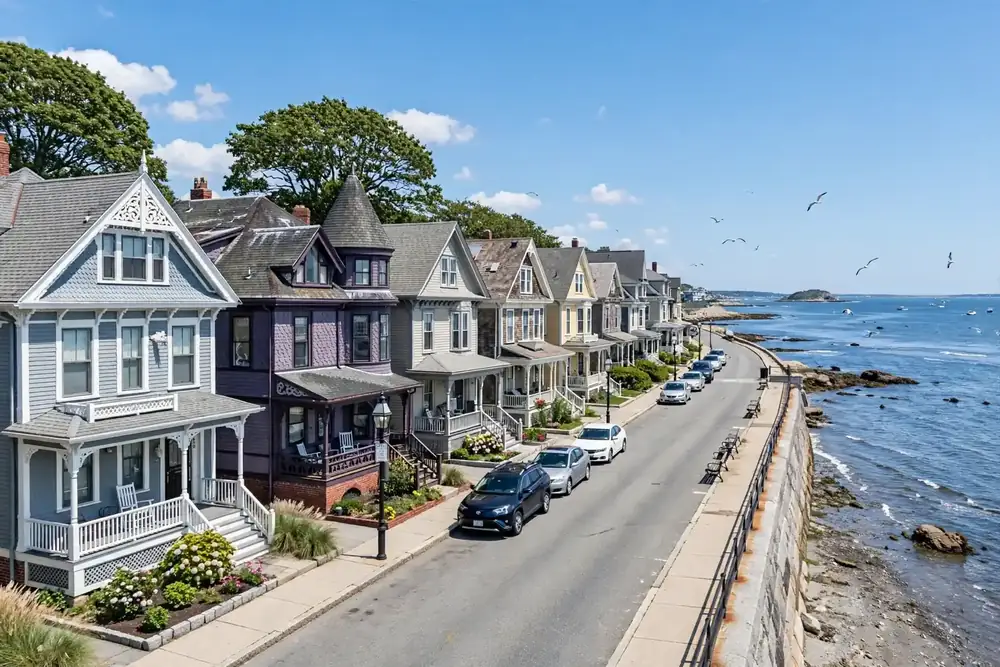
In short: Sewer line repair in Swampscott, MA 01907 starts with a camera inspection that proves the problem is your line, not the town main — then trenchless lining as the default on shallow ledge. Call (833) 713-2101 to schedule.
Sewer Lines in Swampscott, MA 01907
Swampscott's sewers take the triple hit: root intrusion from mature shore trees, groundwater and saltwater infiltration at every joint, and corrosion of cast iron in salt air — all atop shallow ledge that makes excavation a rock job. The median home was built in 1953, mixing 1880s Humphrey Street condos, 1900 Olmsted District colonials like 179 Redington Street, 1914 waterfront carriage houses, 1930 colonial craftsmen, and 2018 luxury condos at Fisherman's Watch.
The ocean defines the ground: Fisherman's Beach, Swampscott Pier with its mooring field, thin coastal soils with shallow ledge outcrops — ‘safely perched atop a hill' is a selling point because the ledge is that shallow — and a water table at sea level. Condo conversions likely retain original clay at the curb beneath renovated interiors, and the Swampscott MBTA station's 30-minute Boston run keeps the town commuter-close. Here the approach is camera-as-proof — demonstrating to homeowners and condo boards alike that the pipe, not the town main, is the problem — then trenchless lining as the default.
Area Facts
- ZIP code
- 01907 (verified — listings at 374/322 Humphrey St, 12 Curry Cir, 179 Redington St, 19 Lincoln House Point)
- Housing stock
- Median built 1953; 1880s Humphrey St condos; 1900 Olmsted District colonials; 1914 waterfront carriage houses; 2018 luxury condos
- Era-typical pipe materials
- Clay tile + cast iron (1880s–1930s); cast iron/Orangeburg watch (1950s median); PVC (2018+); original clay at curb in condo conversions
- Setting
- Direct Atlantic frontage; thin coastal soils; shallow ledge outcrops; water table at sea level; salt spray
- Basements
- Common — unfinished (1900 colonial), finished walk-out (1914 carriage house), laundry/storage (1930 craftsman)
- Landmarks
- Humphrey St waterfront corridor; Fisherman's Beach; Swampscott Pier; Olmsted district; Linscott Park; Swampscott MBTA station (~30 min to Boston)
Sewer Challenges in Swampscott
The triple hit defines every Swampscott diagnosis. First, root intrusion: mature shore trees over 1880s–1930s clay laterals, joints opened by a century of settlement in thin coastal soil — the camera maps it joint by joint. Second, infiltration: with the water table at sea level, every failed joint admits groundwater and saltwater continuously, and nor'easters add surge-driven peaks that overwhelm already-narrowed lines. Third, corrosion: salt air attacks exposed cast iron — vents, risers, exposed sections — accelerating the metal's decline beyond its inland pace.
Ledge is the constraint that shapes the fix. Shallow granite outcrops mean excavation hits rock almost immediately; the ‘perched atop a hill' lots are perched on the very rock that prohibits trenching. Condo ownership adds the governance layer: conversions with original clay at the curb need board-approved, documented findings before any work, and the camera-as-proof inspection is designed to provide exactly that — demonstrating that the lateral, not the town main, is the problem.
The 1953 median adds the mid-century watch: cast iron and possible Orangeburg in the postwar cohort, each with its own failure mode — corrosion and scaling for iron, ovalization for fiber. A Humphrey Street condo on 1880s clay and a 1950s colonial on iron can sit blocks apart with entirely different pipe stories, which is why the camera reads each property individually.
How Sewer Service Works in Swampscott
The inspection is built as proof. The camera travels the lateral documenting the triple hit — root masses, weeping joints, corrosion — with the locating sonde marking every defect's position and depth. For condo boards, the findings package demonstrates the lateral-versus-main distinction factually: here is the defect, here is its location on your property's line, here is why the town main is not the cause. That documentation is what unlocks board approval.
Trenchless lining is the default: it addresses all three hits at once — sealing root entries, waterproofing the joints against sea-level infiltration, and covering corroded interiors with inert epoxy — installed from small access points without touching the ledge that prohibits excavation. Where lines have deformed beyond lining, pipe bursting replaces them along the same corridor, still avoiding the rock. Exposed cast iron gets its salt-air corrosion assessment as part of every plan.
Waterfront properties get the surge-aware plan: repairs specified to hold against nor'easter-driven peaks as well as background infiltration, with the watertight lined or burst line as the answer to both. The ocean stays where it is; the line stops admitting it.
Streets and Landmarks We Serve in Swampscott
Local specialists serve all of Swampscott: the Humphrey Street waterfront corridor with its 1880s condos; Redington Street and the historic Olmsted district; Curry Circle and the craftsman blocks; Lincoln House Point and the carriage-house waterfront; Greenwood Avenue and the Fisherman's Watch area; the Fisherman's Beach and Swampscott Pier districts; Linscott Park and the town-events area; and the neighborhoods around the Swampscott MBTA station. Condo owners, boards, and homeowners all start the same way — call (833) 713-2101 for the camera-as-proof inspection that documents the problem before anything is approved.
Ledge, Salt Air, and Condo Boards in Swampscott
Swampscott's oceanfront housing takes a triple hit, and the camera inspection has to check for all three. The coastal stock — 1880s Humphrey Street condos, 1900 Olmsted District colonials like 179 Redington Street, the 1914 waterfront carriage house at 19 Lincoln House Point, 1930 colonial craftsmen like 12 Curry Circle — runs clay tile and cast iron at the curb, often original. The triple hit: root intrusion from mature shore trees working the clay joints, groundwater and saltwater infiltration at every failed bell with the water table at sea level, and salt-air corrosion on exposed cast iron. The 2018 luxury condos at Fisherman's Watch run modern PVC — the camera confirms which era a given building belongs to.
Excavation here hits rock almost immediately. Swampscott sits on shallow ledge — the 'safely perched atop a hill' selling point in listings is granite talking — with thin coastal soils over it. Open-trench replacement means rock work along the Humphrey Street waterfront corridor or the Redington Street blocks, with costs and disruption to match. That geology positions trenchless lining as the default: seal the joints against roots and seawater from the inside, no rock excavation, no torn-up street. Bursting handles the collapsed sections through two small pits.
The condo factor shapes the process. Converted condos along the waterfront typically need board approval for common-area work, and a trenchless proposal — no excavation, no landscape destruction, documented on video — is far easier to approve than a trench. The camera also serves a persuasion function: footage proving the pipe, not the town main, is the problem settles the building-versus-municipality question before money is discussed. From Fisherman's Beach and the pier to Linscott Park and the blocks around the Swampscott MBTA station, thirty minutes from Boston, the inspection is the argument. Call (833) 713-2101.
Frequently Asked Questions
What is the 'triple hit' you mention for Swampscott?
Root intrusion from shore trees, groundwater/saltwater infiltration at every failed joint, and salt-air corrosion of cast iron — all at once, on shallow ledge that prohibits easy excavation. The camera documents all three in one inspection, and trenchless lining addresses all three together. Call (833) 713-2101 for the inspection.
How do we prove to our condo board that it's our line?
The camera-and-locating inspection produces documented findings: defect locations and depths on your property's lateral, distinguishing it factually from the town main. That evidence package is designed for board review and approval — it turns a debate into a decision.
Can anything be done about the ledge?
It is worked around, not through: trenchless lining operates inside the existing pipe and bursting follows its corridor, so the shallow granite is never excavated. Depth-to-ledge is mapped during inspection so the plan accounts for the rock explicitly — the ledge is the reason for trenchless, not an obstacle to it.
Does saltwater really get into the sewer line?
Through failed joints below the sea-level water table, yes — saline groundwater infiltrates continuously, and surge events add peaks. The camera shows weeping joints directly, and lining seals them watertight against exactly this pressure.
My condo was renovated — is the pipe new too?
Not necessarily. Conversions often retain the original clay lateral at the curb beneath renovated interiors — the visible updates did not reach the buried line. The camera reveals the actual pipe regardless of the renovation's age; many ‘new' condos sit on 1880s clay.
What about the 2018-era construction?
Modern PVC on the luxury developments, where service means inspection and maintenance rather than rehabilitation. The camera confirms the material on any visit — and a clean baseline on new pipe is valuable for the association's records.
Sewer Line Problems Don’t Wait. Neither Should You.
Call now and reach a local sewer line specialist serving Beverly, MA and nearby North Shore communities — 24/7.
(833) 713-2101Free to call · No obligation · 24/7 emergency line