
Sewer Line Repair in Hamilton, MA
Three-hundred-year-old farmhouses and 200-foot laterals through pasture and woodland — Hamilton demands mapped, trenchless sewer work that preserves the landscape. Call (833) 713-2101.
- 24/7 emergency line
- Local North Shore specialists
- Camera inspection first
In short: Sewer line repair in Hamilton, MA 01936 starts with a camera inspection with sonde locating — non-negotiable on multi-acre lots with 150–300 foot laterals. Call (833) 713-2101 to schedule the mapped survey.
Sewer Lines in Hamilton, MA 01936
Hamilton's housing stock is a barbell: 17th and 18th century farmhouses from its 1638 settlement as The Hamlet of Ipswich on one end, 1950s Capes and mid-century suburbia on the other, with Gilded-Age gentleman's-farm estates — the Bradley Palmer, Patton, and Appleton properties — in between. About 30 percent of units were built before 1939, most of the rest between 1940 and 1979, and only about 2 percent since 2000. Both ends of the barbell fail the same way: long laterals across big lots.
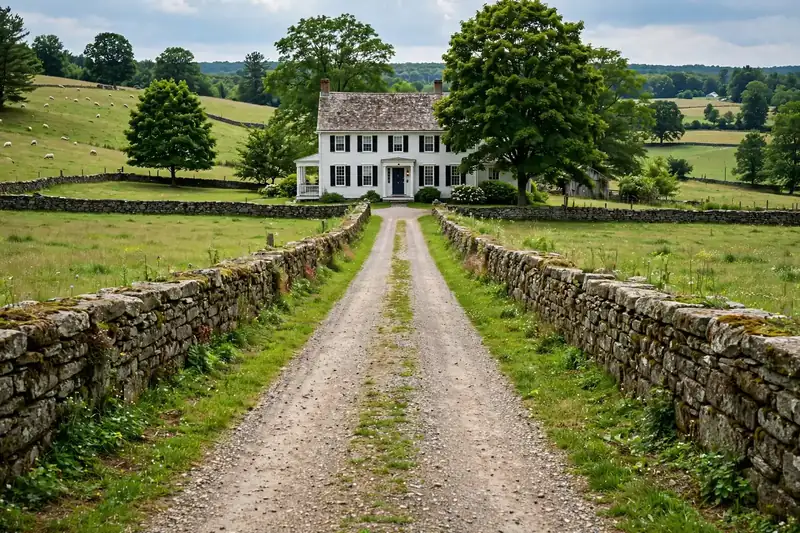
Estate and farm parcels can run 150 to 300 feet of clay or Orangeburg tile through pasture and woodland, where roots and frost heave work every joint for decades. The rural setting — glacial till, drumlin fields, old stone walls on winding roads, Chebacco Lake and Chebacco Woods — is beautiful and brutal on buried pipe. Well, septic, and town services vary by street, so the disposal type is confirmed per address before any plan is made. Here, camera with sonde locating is non-negotiable: you must map the full run before choosing the repair.
Area Facts
- ZIP code
- 01936 (verified — realtor.com; 01982 is South Hamilton)
- Housing stock
- 17th–18th century farmhouses; 1950s Capes; Gilded-Age gentleman's-farm estates; mid-century suburbia; ~2% built since 2000
- Era-typical pipe materials
- Clay tile + cast iron (pre-1939 third); cast iron and Orangeburg (1940–79 bulk — dominant risk); PVC (post-2000)
- Lots
- Estate acreage; laterals commonly 150–300 feet through pasture and woodland
- Soil & drainage
- Glacial till, drumlin fields, old stone walls; Chebacco Lake and Woods; mature trees and horse-pasture root systems
- Landmarks
- Hamilton/Wenham MBTA station; Route 1A and Bay Road; Myopia Hunt Club (polo since 1880s); Patton Homestead (28 acres); Bradley Palmer State Park
Sewer Challenges in Hamilton
Length is the defining challenge. A 200-foot clay lateral has roughly four times the joints of a 50-foot city lateral — four times the root entry points, four times the infiltration points, four times the segments for frost heave to work. On estate parcels, those joints run through pasture and woodland where mature root systems and horse-pasture vegetation hunt moisture aggressively, and through old stone-wall country where the pipe's path threads historic features. The camera footage from Hamilton runs shows the pattern: progressive joint deterioration along the length, root intrusion intensifying under wooded sections, infiltration where the run dips through low ground.
The barbell stock means two failure modes. The antique farmhouses run ancient clay — joints opened by centuries of settlement in till, roots through every bell. The 1940–1979 bulk runs cast iron and Orangeburg — the fiber pipe ovalizing under decades of load, the iron corroding. A single service call must be ready for either, and the camera must travel the entire run: a problem at foot 180 is invisible from the house, and planning a repair without the full map is guesswork.
Open trenching is the non-starter that shapes every plan. Trenching 200 feet through old stone walls, specimen trees, pasture, and woodland — destroying the very landscape that defines the property — is unacceptable to Hamilton owners. The realistic options are trenchless or nothing: bursting that replaces the line along its corridor, or lining that seals it, both planned from the fully mapped survey.
How Sewer Service Works in Hamilton
The mapped survey is the service. A camera with a locating sonde traverses the entire lateral — however long — marking every defect's depth and position from above ground, tracing the pipe's path relative to stone walls, specimen trees, paddocks, and outbuildings. The footage is reviewed with the owner as a journey along the run: sound sections, joint damage, root zones, infiltration points, deformation. Nothing is planned until the full map exists.
For long clay runs with joint failure but sound barrels, cured-in-place lining seals every joint in one continuous barrier — the highest-value repair per foot in the fleet, since it renews 200 feet of line from small access points without touching the landscape. Where Orangeburg has deformed or sections have collapsed, pipe bursting replaces the line along the same corridor, again preserving walls, trees, and pasture. Septic-fed properties get the full-system assessment: the camera maps to the tank, and tank, distribution, and field enter the plan together. Well/septic versus town services are confirmed per address at the outset — outlying estate lots are often private.
Scheduling respects the rural property: equipment access planned around paddocks and fields, work windows that suit the household, and a site left as it was found. The goal is a renewed line and a landscape that never knew work happened.
Streets and Landmarks We Serve in Hamilton
Local specialists serve all of Hamilton: the historic farm roads off Route 1A and Bay Road — the old Boston–Newburyport stagecoach route; the estate country around the Patton Homestead's 28 acres and Bradley Palmer State Park; the neighborhoods near the Hamilton/Wenham MBTA station on the Newburyport/Rockport Line; the Chebacco Lake and Chebacco Woods area; and the village center around the 1921 Community House. Equestrian properties, gentleman's farms, and village Capes all start the same way — call (833) 713-2101 for the mapped camera survey that must precede any repair on a long rural lateral.
Estate-Length Laterals in Hamilton
Hamilton's housing is a barbell, and both ends fail the same way: through very long laterals. At one end sit 17th- and 18th-century farmhouses from the town's 1638 settlement as Ipswich's Hamlet; at the other, 1950s-through-70s Capes and suburbia, with Gilded-Age gentleman's-farm estates — the Bradley Palmer, Patton, and Appleton properties — in between. Only 2.2 percent of the housing was built after 2000. On estate and farm parcels, the building sewer can run 150 to 300 feet through pasture, woodland, and old stone walls, and every clay or Orangeburg joint along that run has been worked by roots and frost heave for decades.
Length changes the diagnostic. On a multi-acre lot, camera inspection with a locating sonde is non-negotiable: the full run must be mapped — its path, its depth, its material changes — before anyone chooses a method, because the failure could be at the foundation exit or two hundred feet out by the road. The era split decides the fix: clay tile on the antique farmhouses is often a lining candidate, while the 1950s-to-70s Orangeburg on the Cape cohort usually wants pipe bursting. Glacial till and drumlin fields make for rocky digging, and trenching a 200-foot run through specimen trees and historic stone walls is a non-starter for most owners.
Well and septic versus town services vary by street here, so the disposal type gets confirmed per address — outlying estate lots are often private. From the Hamilton/Wenham MBTA station and the Route 1A and Bay Road corridors to Myopia Hunt Club's polo grounds, the 28-acre Patton Homestead, and the shores of Chebacco Lake, the pattern holds: long runs, old pipe, and a camera survey that maps the whole story. Call (833) 713-2101 and mention your lot size — it shapes the inspection plan.
Frequently Asked Questions
Why is locating so important on a large lot?
Because your lateral may run 150–300 feet through pasture and woodland, and the repair must be planned against stone walls, specimen trees, and outbuildings it passes. The locating sonde marks each defect's exact position and depth — without that map, trenchless work cannot be designed and open-cut would be blind. Call (833) 713-2101 for the mapped survey.
Can trenchless methods really handle a 300-foot run?
Yes — length is where trenchless methods save the most. Lining seals the full run from small access points; bursting replaces it along the same corridor. Open-trenching 300 feet through walls, trees, and pasture is the alternative nobody wants. The camera survey measures the exact length and condition first.
My property has a septic system — does that change the service?
It extends it. Outlying Hamilton lots are often private septic, so the disposal type is confirmed per address first. The camera then maps the building sewer to the tank, and the tank, distribution, and leach field are assessed together — a failed line feeding a failing system needs the full picture, not just the pipe.
Will the work damage my stone walls or pasture?
The plan is designed around them. The mapped survey shows exactly where the pipe runs relative to walls, trees, and fields, so access points are placed for minimum impact — typically none to the walls and landscape. Trenchless methods exist precisely for properties where a trench would do more harm than the repair is worth.
How do roots affect such long laterals?
Proportionally: more joints mean more entry points, and woodland root systems are aggressive moisture-seekers. Long clay runs under trees show progressive intrusion along their length on camera. Scheduled clearing manages it; lining the run seals every joint permanently.
What if the line runs under my horse pasture?
Then the repair is planned to keep the pasture usable: trenchless access points are sited at the field's edge where possible, work is scheduled around the animals, and the ground is restored. The mapped survey identifies the pipe's path through the pasture so the plan respects it from the start.
Sewer Line Problems Don’t Wait. Neither Should You.
Call now and reach a local sewer line specialist serving Beverly, MA and nearby North Shore communities — 24/7.
(833) 713-2101Free to call · No obligation · 24/7 emergency line