
Sewer Line Repair in Beverly Point, MA
Harbor-front condos, historic-district worker housing, and a water table at harbor level — Beverly Point needs camera-mapped, trenchless sewer work that respects tight lots and associations. Call (833) 713-2101.
- 24/7 emergency line
- Local North Shore specialists
- Camera inspection first
In short: Sewer line repair in Beverly Point, MA 01915 starts with a camera inspection — essential where condo associations, shared lots, and a high water table complicate every repair. Call (833) 713-2101 to schedule.
Sewer Lines in Beverly Point, MA 01915
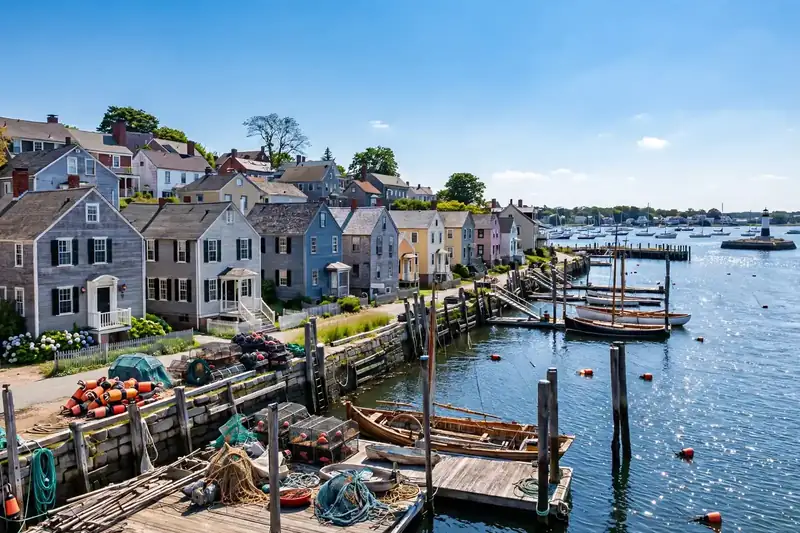
Beverly Point is Beverly's harbor-side urban edge: waterfront condos on Front Street and Water Street — the buildings at 53 Front Street and 121 Water Street carry the neighborhood's 01915 ZIP — set beside the Fish Flake Hill Historic District's late-19th and early-20th century worker housing between Cabot and Rantoul Streets. It is dense, coastal, and layered, with condo conversions sitting atop 1890s–1920s infrastructure.
Below grade, the Point contends with the harbor itself. The water table runs high against Beverly Harbor and the Danvers River waterfront, historic fill complicates excavation in places, and the dense lots leave almost no room to dig between buildings. Condo associations add an approval layer to every project, and shared driveways mean the line's path may cross common areas. Here, camera-first diagnosis is not a preference — it is the only sane way to plan, because the fix calculus is trenchless lining versus replacement-only-where-collapsed, with digging constrained at every turn.
Area Facts
- ZIP code
- 01915 (verified — condos at 53 Front St, 121 Water St, 116-128 Rantoul St)
- Housing stock
- Waterfront condos; Fish Flake Hill Historic District worker housing (1890s–1920s); dense urban-coastal mix
- Era-typical pipe materials
- Clay tile laterals with cast-iron DWV (historic district); mixed original clay at curb with newer in-building (condo conversions)
- Soil & drainage
- Harbor waterfront on Beverly Harbor/Danvers River; high water table; possible historic fill; storm-surge exposure
- Constraints
- Tight urban lots, shared driveways, condo association approvals, minimal setbacks
- Landmarks
- Front St, Water St, Rantoul St corridors; Fish Flake Hill Historic District; adjacent Beverly Depot MBTA
Sewer Challenges in Beverly Point
Water defines the Point's sewer problems. At or near the harbor's water table, clay laterals do not just suffer root intrusion — they admit saltwater and groundwater infiltration at every failed joint, continuously. The camera footage here often shows infiltration as the dominant finding rather than a secondary one: joints weeping with the tide cycle, standing water in the line even in dry weather, corrosion accelerated by the saline environment. A line that looks merely old in another neighborhood is actively taking on water here.
Density defines the repair constraints. The Fish Flake Hill worker housing sits on tight lots with minimal setbacks; condo conversions stack modern interiors atop original clay at the curb; shared driveways and common areas mean excavation disrupts not just one household but the association. Infill fill soils near the harbor complicate any digging that does occur — the ground is less predictable than the till inland. And the historic-district character of Fish Flake Hill argues against open excavation on streetscape grounds as well as practical ones.
Responsibility can be murky. Converted buildings may share laterals or run closely spaced individual lines where nobody documented which is which, and condo associations need factual answers before authorizing work on common elements. Camera inspection with locating untangles all of it: whose lateral is whose, where each defect lies, and which repairs fall to the unit versus the association.
How Sewer Service Works in Beverly Point
Diagnosis here is forensic. The camera inspection maps the lateral — or laterals, where shared lines are suspected — with the locating sonde marking every defect against the tight lot above. Infiltration is assessed with attention to water level: inspections timed near high water show the joints at their worst, which is exactly when the repair plan should see them. For condos, the findings are documented for the association: which sections are common elements, where the defects lie, and what each repair option disturbs.
The repair calculus favors trenchless lining overwhelmingly. Lining seals the infiltration-plagued joints without digging in saturated fill, without disturbing condo common areas, and without opening the historic streetscape — it is the method that fits the Point's constraints rather than fighting them. Pipe bursting serves where the line has deformed beyond lining's reach, still through small pits rather than trenches. Open-cut replacement is reserved strictly for collapsed sections where nothing else is viable, planned with the association's approval process in mind from day one.
Coordination is part of the service. Shared-driveway access, association notification, parking for equipment on narrow streets — these logistics are handled upfront so the work itself proceeds without friction. The goal is a watertight line and a neighborhood that barely noticed the repair.
Streets and Landmarks We Serve in Beverly Point
Local specialists serve the full Point: the Front Street and Water Street waterfront condo corridors; the Fish Flake Hill Historic District between Cabot and Rantoul Streets; the 116–128 Rantoul Street blocks; and the streets stepping down to the Danvers River waterfront. Adjacent downtown and the Beverly Depot MBTA junction are minutes away. Condo owners, association managers, and historic-district homeowners all start the same way: call (833) 713-2101 for a camera inspection that maps the line, the defects, and the responsibilities — before anyone authorizes work.
Condos, Shared Lines, and Harbor-Front Groundwater
Beverly Point is where Beverly's sewer story gets complicated by ownership. The Fish Flake Hill Historic District — late-19th and early-20th century worker housing between Cabot and Rantoul Streets, proposed as a Neighborhood Conservation District — holds original clay-tile laterals now serving converted condos and multi-unit buildings. Waterfront condo rows on Front Street and Water Street layer the same complication: the clay at the curb may be original 1900s work while the in-building plumbing is modern, and on shared lots nobody is quite sure where one lateral ends and the next begins.
That uncertainty is exactly what camera inspection with locating resolves. Before any repair is discussed, the camera maps each lateral's path and the sonde marks it on the surface — ownership questions get answered with footage rather than arguments. This matters doubly in condo buildings, where the association typically must approve any work affecting common areas, and a trenchless method that avoids digging up the shared driveway or courtyard is far easier to get approved than an open trench.
The harbor sets the physical conditions. Beverly Point sits directly on Beverly Harbor and the Danvers River waterfront, where the water table runs high and historic fill soils complicate any excavation. Clay joints here admit saltwater and groundwater as readily as roots, and saturated fill shifts more than undisturbed soil. Lining seals the whole joint system against the harbor's pressure from small access points — no dewatering a trench in fill, no disturbing the streetscape a block from Beverly Depot. If your building shares a lot or a driveway, call (833) 713-2101 and ask for a locating survey first.
Frequently Asked Questions
Why is infiltration such a big deal in Beverly Point?
Because the water table sits at or near harbor level, every failed clay joint below it admits groundwater continuously — not just during storms. That infiltration overloads the line, accelerates deterioration, and on shared systems affects everyone downstream. Lining seals the joints watertight, which is why it is the default recommendation here. Call (833) 713-2101 for an inspection.
Our condo association needs to approve work — how does that affect the repair?
The camera inspection produces documented findings — defect locations, depths, and which sections are common elements — that give the association a factual basis for approval. Trenchless methods help the approval case enormously since they avoid disturbing common areas. The findings package is designed to be shared with boards and managers.
How do we know which lateral is ours in a converted building?
Camera inspection with locating: the camera travels each accessible line while the sonde marks its path from above ground, mapping which fixtures drain to which lateral and where they run. This untangles shared or closely spaced lines before anyone pays for work on the wrong pipe.
Can you work around our shared driveway and limited parking?
Yes — trenchless work needs only small access points, and logistics (equipment placement, neighbor notification, association coordination) are planned upfront. The compact work footprint is one of the main reasons trenchless methods dominate in dense harbor neighborhoods.
Does saltwater damage sewer pipes faster?
It accelerates external corrosion of cast iron and keeps joints saturated, which worsens infiltration. The camera inspection assesses both the pipe wall and the joint condition with the saline environment in mind, and the repair — typically lining — seals the line against it.
What if the line has fully collapsed under our building?
Then the camera shows exactly where, and the plan addresses that section specifically — bursting or targeted open-cut replacement of the collapsed portion, with lining for the remaining joint-damaged run. Collapse does not automatically mean trenching the whole property; it means fixing the collapsed section by the least disruptive viable method.
Sewer Line Problems Don’t Wait. Neither Should You.
Call now and reach a local sewer line specialist serving Beverly, MA and nearby North Shore communities — 24/7.
(833) 713-2101Free to call · No obligation · 24/7 emergency line