
Sewer Line Repair in Prides Crossing, MA
Gilded-Age estates with hundred-foot laterals through historic grounds — Prides Crossing demands white-glove trenchless work that preserves every garden and wall. Call (833) 713-2101.
- 24/7 emergency line
- Local North Shore specialists
- Camera inspection first
In short: Sewer line repair in Prides Crossing, MA 01965 starts with a camera-and-locating survey of the full estate run — white-glove trenchless work that preserves the gardens and stone walls. Call (833) 713-2101 to schedule.
Sewer Lines in Prides Crossing, MA 01965
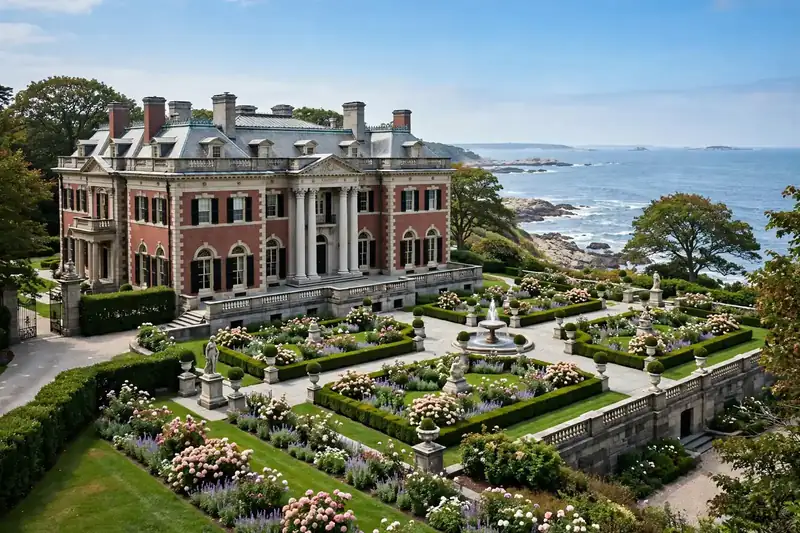
Prides Crossing is Beverly's Gilded-Age estate enclave: oceanfront mansions including 15 Paine Avenue — Sunset Rock, with Olmsted-designed gardens, reimagined in 1950 — and 1895's 23 Paine Avenue, plus wooded-lot homes like the 1969 property at 5 Indian Hill on two private acres. About 145 housing units, a population around 329, Paine Avenue and private Indian Hill as the main roads — and the 01965 ZIP itself is a PO Box ZIP whose preferred city is Prides Crossing, a neighborhood of Beverly.
The sewer reality is estate-scale: 1890s–1950s mansions on clay tile and cast iron with 100-plus-foot building sewers running through Olmsted-era landscaping and mature woodland. Root intrusion is essentially guaranteed; open-trenching through designed historic grounds is unacceptable to these owners. The service here is white-glove trenchless: camera-locate the full run, then pipe bursting or lining that preserves the gardens, stone walls, and specimen trees — with salt-air corrosion checks on any exposed cast iron near the shore.
Area Facts
- ZIP code
- 01965 (verified — PO Box ZIP; preferred city Prides Crossing, neighborhood of Beverly)
- Housing stock
- Gilded-Age oceanfront mansions (15 Paine Ave Sunset Rock, Olmsted gardens; 23 Paine Ave 1895); wooded-lot homes (5 Indian Hill 1969)
- Era-typical pipe materials
- Clay tile and cast iron (1890s–1950s estates); long private drives = long building sewers; cast iron/PVC (mid-century)
- Setting
- ~145 housing units, population ~329; elevated oceanfront plots; thin coastal soils over ledge; wooded lots
- Constraints
- Olmsted-era landscaping, stone walls, specimen trees; private roads; historic grounds that cannot be trenched
- Landmarks
- Paine Ave; Indian Hill (private road); West Beach nearby (members-only); Prides Crossing MBTA station (limited service); Beverly Farms village nearby
Sewer Challenges in Prides Crossing
Scale is the challenge. Multi-acre estates run building sewers of 100 feet or more — that is a hundred feet of clay-tile joints from the 1890s–1950s, each joint exposed to the aggressive root systems of mature woodland and Olmsted-era plantings. Root intrusion here is not a risk but a near-certainty, and the camera footage from estate runs shows it: progressive joint invasion along the length, intensifying under the wooded sections, with infiltration where the run dips toward the shore.
Preservation is the constraint. Open-trenching through designed historic grounds — Olmsted gardens, two-century-old stonework, specimen trees — is unacceptable to owners who maintain these landscapes as heritage. The repair must be invisible: the line renewed, the grounds untouched. Elevated oceanfront plots add the exposure chapter: thin coastal soils over ledge, salt spray, direct storm-surge exposure on the waterfront side, and accelerated corrosion on any exposed cast iron near the shore.
The private character adds logistics. Private roads like Indian Hill, limited MBTA service, the enclave's discretion expectations — service here is conducted with the quiet professionalism the neighborhood expects: mapped, planned, executed cleanly, and gone without a trace.
How Sewer Service Works in Prides Crossing
White-glove trenchless, from survey to restoration. The camera-and-locating survey maps the full estate run — however long — marking every defect's depth and position against the grounds above: the gardens, the walls, the specimen trees, the drive. The footage is reviewed with the owner as a complete picture of the line's condition, and the trenchless plan is designed around the landscape's protected features explicitly.
For long clay runs with joint failure, cured-in-place lining seals every joint in one continuous barrier — the highest-value repair per foot for estate laterals, renewing the line from small access points sited to avoid every protected feature. Where pipe has deformed or collapsed, pipe bursting replaces it along the same corridor, again with minimal surface presence. Salt-air corrosion on exposed cast iron is checked and addressed; the shore-side exposure is factored into material choices. Every plan here is preservation-first by design.
Scheduling and discretion match the enclave: work windows that suit the household, equipment staged discreetly, neighbors on private roads notified as a courtesy, and grounds restored to the standard they were found in — which, for trenchless work, means essentially undisturbed.
Streets and Landmarks We Serve in Prides Crossing
Local specialists serve the full enclave: Paine Avenue and the oceanfront mansion row, including the landmark estates; Indian Hill and its private road; the wooded-lot streets toward Beverly Farms village; the blocks near the Prides Crossing MBTA station's limited service; and the shore-side lanes with West Beach access nearby. Estate owners, property managers, and stewards of historic grounds all start the same way — call (833) 713-2101 for the camera-and-locating survey that maps the full run before any white-glove trenchless plan is designed.
White-Glove Trenchless for Gilded-Age Estates
Prides Crossing is a private enclave of Gilded-Age estates, and its sewer work has to be invisible. The oceanfront mansions — 15 Paine Avenue's Sunset Rock with its Olmsted-designed gardens, reimagined in 1950; 23 Paine Avenue, 1895 — and wooded-lot homes like the 1969 build at 5 Indian Hill on two private acres run long clay-tile and cast-iron building sewers: hundred-plus-foot runs beneath designed historic grounds, mature woodland, and stone walls. The 01965 ZIP is a post-office designation for a neighborhood of about 145 housing units and 329 residents, with a median household income in the top national bracket — these are properties where open-trenching through the gardens is simply unacceptable to the owners.
Root intrusion on estate grounds is essentially guaranteed. Mature woodland root systems have had a century to colonize every clay joint along those long runs, and the thin coastal soils over ledge give roots nowhere else to go. The diagnostic is camera inspection with a locating sonde mapping the full run — path, depth, material, defects — because on multi-acre grounds the failure could be anywhere along two hundred feet of pipe. The repair is white-glove trenchless: pipe bursting or lining that follows the existing corridor, preserves the Olmsted-era landscaping, the stone walls, and the specimen trees, and leaves the grounds as found.
The oceanfront setting adds salt-air corrosion checks on any exposed cast iron near the shore, and the elevated plots' direct storm-surge exposure means the inspection notes groundwater conditions too. Access runs through the Prides Crossing MBTA station's limited service — three to four trains each direction — and the Route 128 corridor, with Beverly Farms village nearby for the practical side of the visit. For estate owners, the message is discretion and preservation: the line gets renewed, the grounds never know. Call (833) 713-2101 and ask for an estate-lateral survey.
Frequently Asked Questions
Can you repair our line without disturbing the historic gardens?
Yes — that is the design requirement. Lining renews the line from small access points; bursting needs only two pits — both sited from the mapped survey to avoid gardens, walls, and specimen trees. The grounds stay as they are. Call (833) 713-2101 for the survey that makes the plan possible.
How long are estate sewer laterals typically?
Commonly 100 feet or more on multi-acre lots — sometimes much more. That length is exactly why the camera-and-locating survey comes first: the full run must be mapped, measured, and assessed before any trenchless plan is designed to its dimensions.
Is root intrusion inevitable on wooded estate lots?
Essentially, yes — mature woodland root systems and century-old clay joints are a guaranteed pairing. The question is never whether roots will come but when the joints are sealed against them. Scheduled clearing manages the interim; lining ends the cycle permanently.
What about salt air near the shore?
Exposed cast iron near the shore corrodes faster in the marine environment, and it is checked specifically on every visit. Buried pipe is largely shielded; the shore-side exposure is factored into material choices for any replacement work.
Do you work discreetly on private roads?
Yes. Service on private roads like Indian Hill is conducted with the enclave's expectations in mind: discreet staging, courteous neighbor notification, work windows that suit the household, and a site left as found. White-glove applies to the logistics as well as the technique.
Our grounds have conservation restrictions — does that matter?
It is planned around explicitly. The mapped survey shows the pipe's path relative to setbacks and protected features, and trenchless access points are sited to comply. Small-footprint methods are inherently the most restriction-compatible approach.
Sewer Line Problems Don’t Wait. Neither Should You.
Call now and reach a local sewer line specialist serving Beverly, MA and nearby North Shore communities — 24/7.
(833) 713-2101Free to call · No obligation · 24/7 emergency line