
Tree Root Removal in Danvers, MA
From Endicott Park, Danversport and the Danvers River to the outer 01923 blocks, Tree Root Removal in Danvers starts with a camera read of clay tile and cast iron on pre-1940 homes; Orangeburg risk on the 1950s-60s boom; PVC post-1980. Root removal here is diagnosis-first: (833) 713-2101.
- Serving Danvers, MA 01923
- Camera-first diagnosis
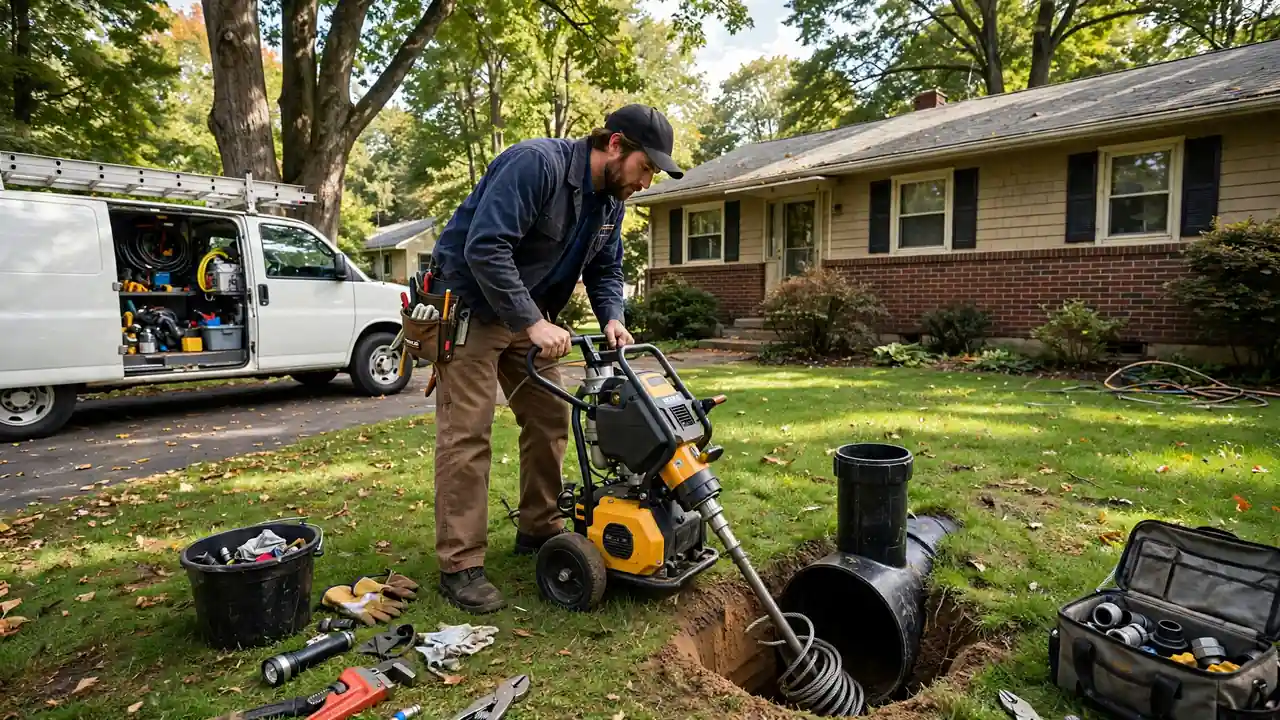
In short: For Danvers (01923), Tree Root Removal means working clay tile and cast iron on pre-1940 homes; Orangeburg risk on the 1950s-60s boom; PVC post-1980 in ground that is inland glacial till and clay loams with scattered wetlands; seasonal saturation near the Danvers River. Root removal begins at (833) 713-2101 with a camera read — diagnosis before tools, on every Danvers visit.
Tree Root Removal in Danvers, MA 01923
Walk Danvers and you walk its pipe stock: typical home built in 1960: 23% pre-1940 stock, a 1950s-60s boom cohort and 1880s-1900s Victorians. Clay tile and cast iron on pre-1940 homes; Orangeburg risk on the 1950s-60s boom; PVC post-1980 runs under those 01923 lawns, which is why Tree Root Removal in Danvers is pipe-specific root removal — the method that saves a Danvers clay joint is not the method that saves deformed fiber conduit, and the 01923 camera tells the crew which one they are standing over.
Ask what waiting costs an Danvers homeowner and the 01923 answer is the finished basement, the landscaping, the driveway. Clay tile and cast iron on pre-1940 homes; Orangeburg risk on the 1950s-60s boom; PVC post-1980 never improves with age in Danvers — it intrudes, offsets, admits water. Tree Root Removal in Danvers is cheapest at the 01923 camera stage, and root removal here is priced to make the early Danvers call the easy call.
Walk Danvers and you walk its pipe stock: typical home built in 1960: 23% pre-1940 stock, a 1950s-60s boom cohort and 1880s-1900s Victorians. Clay tile and cast iron on pre-1940 homes; Orangeburg risk on the 1950s-60s boom; PVC post-1980 runs under those 01923 lawns, which is why Tree Root Removal in Danvers is pipe-specific root removal — the method that saves a Danvers clay joint is not the method that saves deformed fiber conduit, and the 01923 camera tells the crew which one they are standing over.
How Danvers's local conditions change root removal
Start with the Danvers pipe, because clay tile and cast iron on pre-1940 homes; Orangeburg risk on the 1950s-60s boom; PVC post-1980 is the 01923 story. Danvers roots enter through joints, not 01923 pipe walls — so clay tile and cast iron on pre-1940 homes; Orangeburg risk on the 1950s-60s boom; PVC post-1980 decides the entry map: every bell joint is a doorway, and the Danvers camera counts the doorways before any root removal cutting starts — so the Danvers crew arrives expecting the era's failure modes and verifies them on the 01923 camera instead of discovering them mid-root removal.
Then the Danvers ground: inland glacial till and clay loams with scattered wetlands; seasonal saturation near the Danvers River. After root removal, the Danvers camera reads the soil's signature on the 01923 pipe — offsets where ground shifted — because Danvers roots exploit movement first. Tree Root Removal in Danvers is planned against that 01923 ground the way a roofer plans against weather — first, and honestly, on every root removal visit.
A dry-weather diagnosis can miss what an Danvers wet-weather camera catches: low-lying areas near the Danvers River seeing seasonal saturation around laterals. The post-cut Danvers camera pass is timed with water in mind: infiltration at a cut 01923 joint argues for repair, not for another root removal appointment. In Danvers, the honest 01923 Tree Root Removal read happens when the water table is up.
Mature trees across all three housing eras working roots into joints of every pipe material — in Danvers, roots hunt what 01923 joints leak, and joints leak what roots want. mature trees across all three housing eras working roots into joints of every pipe material — the Danvers crew identifies the species pressure on the 01923 line, because some trees re-invade on schedule and the root removal interval must match the Danvers tree, not the calendar. That Danvers feedback loop is the root story, and 01923 Tree Root Removal is planned inside it.
The best Danvers method is the one the 01923 lot allows: mixed lot sizes where the pipe era must be read per property before any work plan. Where Danvers laterals run close together, the sonde on the 01923 camera head maps exactly which Danvers line the roots are in before any root removal cutter goes down — mixed lot sizes where the pipe era must be read per property before any work plan. Tree Root Removal in Danvers starts with what the 01923 property can take — then picks the root removal fix that fits, not the one pre-sold.
The Route 128/I-95 and US 1 corridors plus the Danversport waterfront runs on its own rhythm, and Danvers Tree Root Removal follows it. For Danvers properties with heavy landscape investment, the post-cut root removal recommendation weighs joint repair against cutting forever — the 01923 math is shown, not sold. In 01923, commercial root removal visits are scheduled so the business never stops for a drain.
Area Facts
- Primary ZIP
- 01923 — the ZIP on every root removal quote in Danvers
- Housing stock
- Typical home built in 1960: 23% pre-1940 stock, a 1950s-60s boom cohort and 1880s-1900s Victorians — the three-era town homes behind Danvers root removal calls
- Typical lateral pipe
- Clay tile and cast iron on pre-1940 homes; Orangeburg risk on the 1950s-60s boom; PVC post-1980 — what the Danvers camera usually finds
- Soil and drainage
- Inland glacial till and clay loams with scattered wetlands; seasonal saturation near the Danvers River — the ground root removal is planned against in Danvers
- Trees and roots
- Mature trees across all three housing eras working roots into joints of every pipe material — the root pressure behind Danvers root removal
- Local note
- All three pipe eras on the same streets — camera decides the fix path — the 01923 root removal reality
How root removal works in Danvers, MA
Tree Root Removal in Danvers is a 01923 process, not a product: the steps below are how the Danvers crew earns the right to recommend anything beyond the 01923 camera.
Camera mapping of every entry
Before any Danvers cutting, the 01923 camera maps the full run and counts root entries joint by joint. In Danvers, clay tile and cast iron on pre-1940 homes; Orangeburg risk on the 1950s-60s boom; PVC post-1980 means the entries are at the bell joints — the 01923 map turns root removal from guesswork into a plan.
Cutting sized to the pipe
The Danvers root-cutting head is chosen for the 01923 pipe diameter the camera measured — clay tile and cast iron on pre-1940 homes; Orangeburg risk on the 1950s-60s boom; PVC post-1980 — and the Danvers run is cut clean. Flow is restored the same 01923 visit, debris flushed out by the root removal crew.
Post-cut camera: the honest read
With Danvers roots gone, the 01923 camera reads the pipe wall itself: which joints the roots entered, whether those Danvers joints are offset or cracked, and whether low-lying areas near the Danvers River seeing seasonal saturation around laterals enters there too. This 01923 footage — not the cutting — decides the root removal next step.
Repair, line, or schedule
Sound Danvers joints get a root removal interval matched to the 01923 tree pressure (mature trees across all three housing eras working roots into joints of every pipe material); damaged Danvers joints get a repair or lining quote with the 01923 footage attached. Either way you leave knowing where your Danvers line stands.
Signs you need root removal in Danvers
Read this list against your Danvers home: each 01923 sign maps to something specific the Danvers camera checks during root removal.
- The same fixtures slowing every spring and fall — in Danvers, this 01923 pattern points the camera at clay tile and cast iron on pre-1940 homes; Orangeburg risk on the 1950s-60s boom; PVC post-1980 before any root removal.
- Gurgling that returns months after a drain was 'cleared' — a classic Danvers root removal trigger: the 01923 camera checks clay tile and cast iron on pre-1940 homes; Orangeburg risk on the 1950s-60s boom; PVC post-1980 first.
- A camera showing fibrous masses at the joints — the Danvers crew reads this as clay tile and cast iron on pre-1940 homes; Orangeburg risk on the 1950s-60s boom; PVC post-1980 on the 01923 camera during root removal.
- Large trees standing over the lateral's path — in Danvers, this 01923 pattern points the camera at clay tile and cast iron on pre-1940 homes; Orangeburg risk on the 1950s-60s boom; PVC post-1980 before any root removal.
- Cleanouts that need clearing on a schedule — a classic Danvers root removal trigger: the 01923 camera checks clay tile and cast iron on pre-1940 homes; Orangeburg risk on the 1950s-60s boom; PVC post-1980 first.
- Neighbors on {area} streets with known root problems — the Danvers crew reads this as clay tile and cast iron on pre-1940 homes; Orangeburg risk on the 1950s-60s boom; PVC post-1980 on the 01923 camera during root removal.
Related pages for Danvers
The <a href="/danvers/">Danvers area page</a> maps 01923 ground and Danvers housing eras; the <a href="/tree-root-removal/">Tree Root Removal service page</a> maps the methods. Together they frame this 01923 root removal page for Danvers.
The Danvers area page maps 01923 ground and Danvers housing eras; the Tree Root Removal service page maps the methods. Together they frame this 01923 root removal page for Danvers.
Frequently Asked Questions
Why do roots keep coming back in my Danvers line?
Because Danvers cutting removes the roots, not the doorway. mature trees across all three housing eras working roots into joints of every pipe material — and clay tile and cast iron on pre-1940 homes; Orangeburg risk on the 1950s-60s boom; PVC post-1980 means every 01923 bell joint is an entry. Until the Danvers joints are repaired or lined, regrowth is a root removal schedule, not a surprise.
Will cutting damage my clay tile and cast iron on pre-1940 homes; Orangeburg risk on the 1950s-60s boom; PVC post-1980 line?
Not when the Danvers head is sized to the 01923 pipe the camera measured. That Danvers sizing step is the whole safety of the root removal visit — an oversized cutter in old 01923 joints does the damage people fear, so camera measurement comes first in Danvers.
How often will my 01923 line need cutting?
The Danvers tree sets the interval, not the calendar. mature trees across all three housing eras working roots into joints of every pipe material — after the first 01923 cut and camera read, the Danvers crew quotes an honest root removal interval, often 12–24 months here, instead of a later surprise.
Should I just keep cutting, or fix the joints in Danvers?
The post-cut Danvers footage answers with math. If 01923 joints are sound, scheduled root removal is the economical answer. If the Danvers camera shows roots entering through offset joints — common where clay tile and cast iron on pre-1940 homes; Orangeburg risk on the 1950s-60s boom; PVC post-1980 — 01923 joint repair or lining ends the cycle.
Do I need to remove the tree over my Danvers lateral?
Rarely — and the Danvers crew says so honestly. mature trees across all three housing eras working roots into joints of every pipe material. In most 01923 cases the fix is at the joints — Danvers repair or lining — which lets the tree stay and keeps 01923 roots out after root removal.
What does low-lying areas near the Danvers River seeing seasonal saturation around laterals change about root work here?
It makes the post-cut Danvers read decisive. Danvers roots follow water, so the 01923 joints that admit groundwater are the re-entry points — root removal without addressing the wet Danvers joints schedules the next invasion: (833) 713-2101.
Sewer Line Problems Don’t Wait. Neither Should You.
Call now and reach a local sewer line specialist serving Beverly, MA and nearby North Shore communities — 24/7.
(833) 713-2101Free to call · No obligation · 24/7 emergency line
Serving Danvers, MA 01923 — Tree Root Removal available 24/7