
Sewer Gas Smell: Health Effects | Beverly
What sewer gas is, what it does to your health at various exposures, and the diagnostic path from odor to source to permanent fix.
- Practical guide
- Local specialists
- Camera first
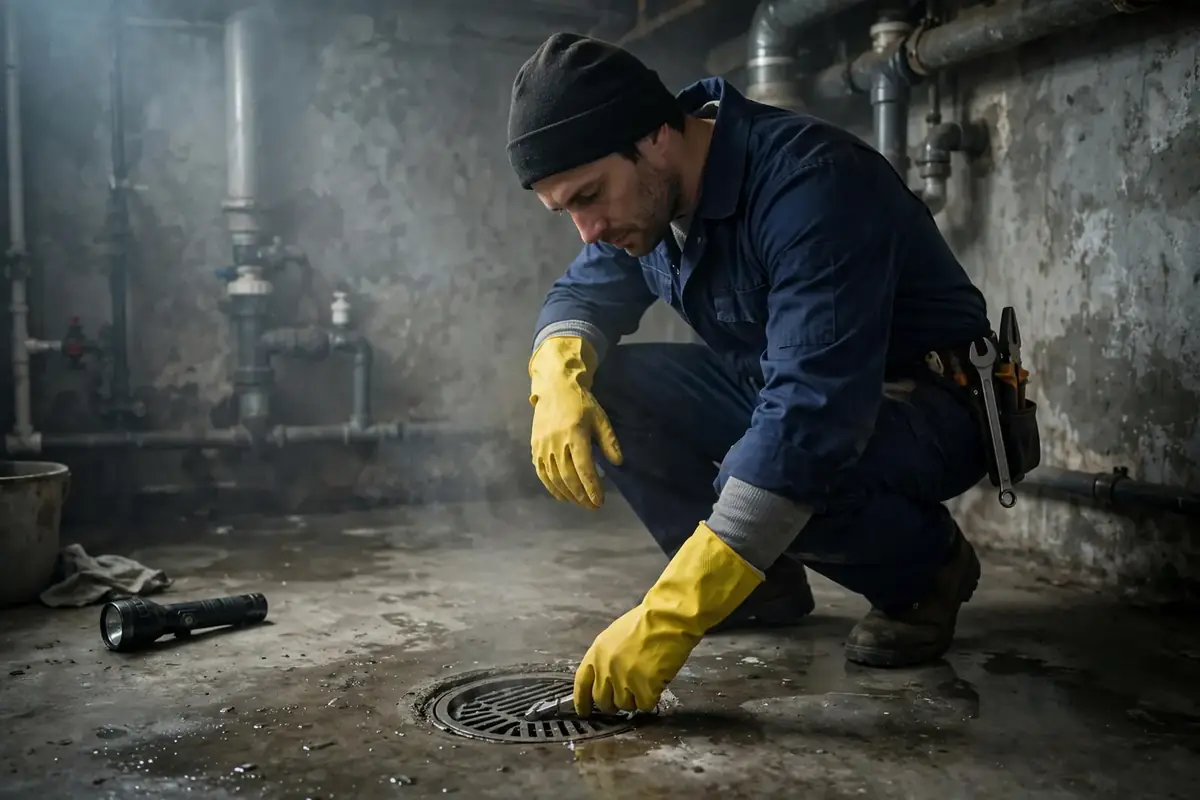
That rotten-egg smell — hydrogen sulfide, the signature compound of sewer gas — is your nose detecting a plumbing failure. Sewer gas is a mixture: hydrogen sulfide, methane, ammonia, carbon dioxide, and assorted volatile compounds, all of which belong in the sewer line and none of which belong in your living room. The smell is a symptom; the entry point is the disease.
This guide covers what sewer gas is, what exposure does to health at various levels, and — most importantly — how to find and fix the source. If you smell sewer gas now, ventilate the area and call (833) 713-2101: the odor is the warning, and warnings deserve prompt investigation.
What Sewer Gas Is
Sewer gas forms from the anaerobic decomposition of organic waste — the same biology that runs every sewer line. Hydrogen sulfide (H2S) provides the rotten-egg odor and is detectable by most people at extremely low concentrations, which makes the nose a sensitive early-warning instrument. Methane is odorless but displaces oxygen and is flammable at concentration. Ammonia irritates eyes and airways. In a properly functioning plumbing system, water-filled P-traps and vent stacks keep all of it in the pipes and out of the building.
When you smell it indoors, something in that containment has failed: a dry trap, a cracked vent, a broken seal, or a compromised sewer line. The gas itself is the messenger — the message is that the barrier between the sewer and your home is breached.
Health Effects by Exposure Level
At the low concentrations typical of residential odor complaints — the smell is noticeable but not overwhelming — effects are usually limited to nuisance: headache, nausea, eye and throat irritation, and loss of appetite. These are real symptoms worth addressing, but they resolve when the source is fixed. Hydrogen sulfide has a cruel property at higher concentrations: it deadens the sense of smell, so a fading odor does not always mean a fading problem.
At higher concentrations — rare in homes, possible in confined spaces like crawlspaces, pits, or unventilated basements with major line breaks — hydrogen sulfide becomes genuinely dangerous: dizziness, difficulty breathing, and at extreme levels, rapid unconsciousness. Methane's risk is displacement and flammability rather than toxicity. The practical rule: persistent strong odor, especially with physical symptoms, means ventilate, avoid the area, and get professional investigation promptly — not next week.
Finding the Source: The Usual Suspects
Start with the simplest: dry traps. Floor drains, basement sinks, and guest bathrooms that go unused let their trap water evaporate, opening a direct path for gas. Pouring water into every drain — and a tablespoon of mineral oil in rarely used floor drains to slow evaporation — solves an astonishing fraction of odor complaints. Wax ring failures at the toilet base let gas seep around the flange; rocking toilets and water staining at the base are the tells.
Vent problems come next: blocked, cracked, or improperly installed vent stacks disrupt the pressure balance that keeps traps sealed. Then the line itself: cracked or broken building sewers leak gas into the surrounding soil, which migrates through foundation cracks and sump pits into the home. A camera inspection finds line-side sources; a smoke test — non-toxic vapor forced through the system — reveals exactly where gas escapes, indoors or out.
The Smoke Test: Seeing the Invisible
When the source is not obvious, the smoke test is the definitive diagnostic. A blower forces dense, non-toxic, food-grade vapor into the sewer system; the crew watches where it emerges. Smoke from a roof vent: normal. Smoke curling from a toilet base, a wall cavity, a foundation crack, or a cleanout: the leak, located precisely. The test takes under an hour and maps every breach in the system at once.
Smoke testing is particularly valuable in older Beverly homes where generations of renovations have left abandoned connections, capped-but-leaking branches, and vent configurations nobody documented. The vapor finds what the eye cannot — and each wisp is a work order with a location.
Fixing It for Good
Source determines fix. Dry traps: water and maintenance. Failed wax rings: reset the toilet with a new ring. Vent defects: repair or reroute the stack. Line-side breaks: leak detection to characterize, then spot repair, lining, or replacement depending on the footage. Foundation-entry paths get sealed as part of the repair — fixing the pipe without sealing the migration path invites the next odor through the same crack.
After the fix, verification matters: a follow-up smoke test or simply days of odor-free living confirms the source is closed. Persistent odor after repair means a second source — common in old houses with multiple generations of plumbing — and the investigation continues until the nose reports all clear.
Related reading
Frequently Asked Questions
Is the smell of sewer gas dangerous?
At typical residential odor levels, it causes nuisance symptoms — headache, nausea, irritation — rather than serious harm. But strong, persistent odor with physical symptoms warrants prompt investigation, and any odor in a confined space should be taken seriously. Ventilate and call (833) 713-2101 for source diagnosis.
Why does the smell come and go?
Trap water levels, barometric pressure, wind across the vent stack, and water usage patterns all modulate gas entry. Intermittent odor often means a marginal seal — a trap that nearly dries out, a vent that nearly balances — and it will worsen as the underlying defect progresses.
Can I just pour bleach down the drain?
Bleach masks odor without fixing the breach — and it kills the beneficial bacteria in septic systems. The smell returns because the entry path remains. Find the source; do not perfume it.
My basement smells but the upstairs does not. Why?
Gas rises from the lowest breach point — floor drains, sump pits, foundation cracks near the line entry. Basement-localized odor points to a low breach: dry floor-drain traps and foundation entry paths are the first suspects.
How fast can you find the source?
Most odor investigations resolve in a single visit: trap and fixture checks first, then a smoke test if needed, with camera inspection for line-side suspects. Call (833) 713-2101 — odor complaints get priority scheduling because the nose is usually right.
Will fixing the line eliminate the smell permanently?
Fixing the actual source does — which is why diagnosis precedes repair. Masking, perfuming, or sealing one path while another remains open does not. The smoke test's whole-system map is what makes the fix complete.
Sewer Line Problems Don’t Wait. Neither Should You.
Call now and reach a local sewer line specialist serving Beverly, MA and nearby North Shore communities — 24/7.
(833) 713-2101Free to call · No obligation · 24/7 emergency line