
What to Do During a Sewer Backup
The right-now action plan: stop water, protect people, call for help, document, wait wisely — then the 48-hour recovery.
- Practical guide
- Local specialists
- Camera first
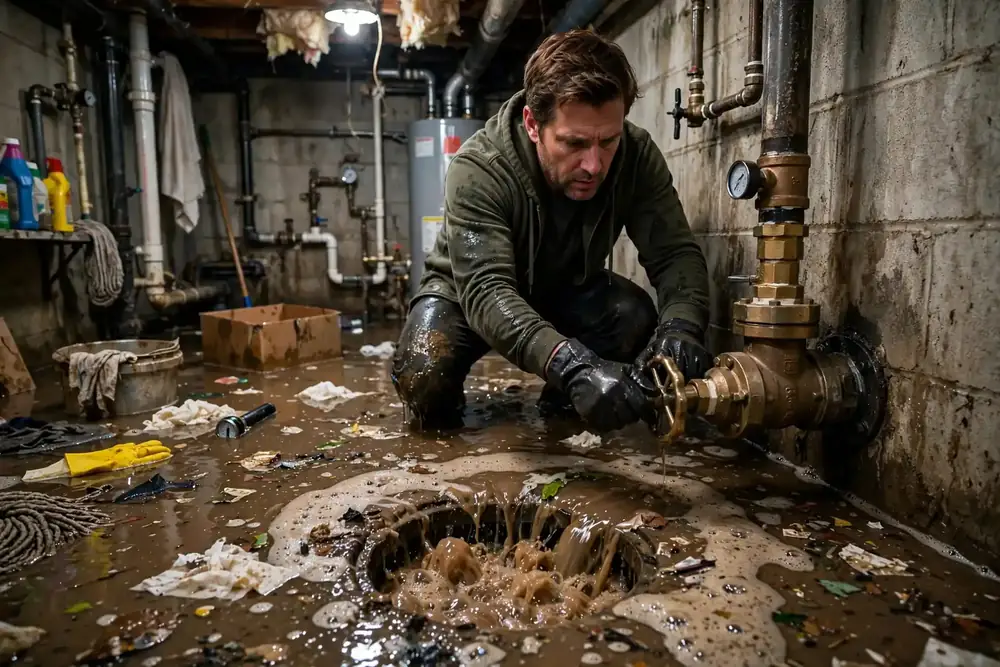
This guide is for right now — water is coming up where it should go down, and you need to know what to do in the next ten minutes. Read the action steps first; the explanations can wait until the specialist is on the way. If sewage is entering your home, call (833) 713-2101 immediately — then work this list.
Step 1: Stop All Water Use — Immediately
Every gallon sent down adds to the backup. Stop the washing machine mid-cycle if it is running. Do not run the dishwasher. No showers, no baths. Minimize toilet flushing — every flush pushes more wastewater toward the blockage, and with the line closed, it has only one place to go: back up. Tell everyone in the household, immediately and plainly: no water down any drain until further notice.
This single step does more than everything else combined. A backup fed by continued water use escalates from a contained mess to a flooding event; a backup starved of inflow stabilizes while you arrange help. Make the calls with dry hands: first the emergency line, then the household.
Step 2: Protect People — Stay Out of the Water
Sewage carries bacteria, viruses, and parasites — standing wastewater is a health hazard, not a housekeeping task. Keep children and pets completely away from affected areas. Do not wade through it to rescue belongings; do not attempt cleanup with household supplies. If sewage is near electrical outlets, appliances, or the breaker panel area, do not touch electrical equipment while standing in or near water — cut power at the main breaker only if you can do so from a dry location.
Ventilate if you can do so safely — open windows in unaffected areas to dilute sewer gas — but do not re-enter affected spaces to do it. Your safety is worth more than anything the water is touching.
Step 3: Call for Professional Help
Call (833) 713-2101 — the emergency line is answered around the clock. Describe what you see: which fixtures are affected, whether sewage is entering living spaces, how fast it is progressing, and any relevant history (previous backups, heavy rain, recent plumbing work). You will get an honest arrival window and instructions for the wait.
Do not call a general handyman, do not rent a snake, and do not pour chemical drain cleaners — caustics damage pipes and create chemical hazards for the technician. The emergency specialist arrives with the right equipment because your description told them what to bring. For the full picture of what happens after the call, our emergency guide walks through the visit step by step.
Step 4: Document for Insurance — Before Cleanup
Before anything is cleaned or moved, document: photos and video of every affected area, water lines on walls, damaged belongings, the fixtures involved. Note the time the backup started and what you observed. This documentation is the foundation of any insurance claim under your water backup endorsement — and it is nearly impossible to reconstruct after cleanup.
Keep every receipt from this point forward: the emergency visit, cleaning services, repairs, sanitization. Notify your insurer promptly — most policies require timely notice. Our insurance guide details how backup claims proceed; the documentation you create now is what makes the claim work later.
Step 5: While You Wait
Keep water use stopped. Stay out of affected areas. If the backup is worsening rapidly — water rising, spreading to new rooms — call back and say so; the dispatcher reprioritizes on changing conditions. If you know where your main cleanout is, mention it when the specialist arrives — it is the first access point they will use. If neighbors are affected too, mention it: multi-property backups indicate a municipal-side issue, which changes the response.
Do not attempt to “help” by opening cleanouts yourself unless the dispatcher advises it — an opened cleanout can release sewage under pressure into the yard or basement, converting a contained backup into an uncontrolled one. The specialist sequences relief deliberately; let them.
After the Emergency: The Next 48 Hours
Once the specialist stabilizes the situation and restores flow, the work shifts to recovery: professional sanitization of affected areas (not household cleaning — sewage contamination requires proper disinfection and often removal of porous materials), the camera diagnosis of what caused the backup, and the repair plan that prevents recurrence. Do not consider the incident closed when the water recedes — the cause remains in the line until diagnosed and addressed.
Within days: the camera inspection footage, the written repair quote, the insurance claim filed with your documentation, and the maintenance plan that ensures this was the last backup rather than the first of a series. The emergency ends when flow is restored; the problem ends when the cause is fixed. Make sure you get both.
Frequently Asked Questions
Is it safe to stay in the house during a backup?
If the backup is contained to a basement or utility area and living spaces are unaffected, usually yes — with affected areas sealed off and ventilated. If sewage is in living spaces, or sewer gas is strong throughout, consider leaving until professionals stabilize the situation. When in doubt, call (833) 713-2101 and describe the conditions for guidance.
Should I turn off the water main?
Stopping drain use is what matters — the water main controls supply, and supply only becomes backup when it goes down a drain. Turning off the main is a blunt way to enforce the no-water rule in a panicked household, and it is reasonable if fixtures keep getting used. The key rule remains: nothing down any drain.
Can I clean up the sewage myself?
Small, contained incidents on hard surfaces can be disinfected by homeowners with proper protection (gloves, boots, ventilation, EPA-registered disinfectant). Anything involving porous materials — carpet, drywall, upholstery — or significant volume needs professional sanitization. Sewage contamination is a health matter, not a housekeeping one.
How long until someone arrives?
Active sewage emergencies get immediate dispatch — you will receive an honest arrival window on the call. Response time depends on your location within the service area and current demand; the dispatcher will tell you plainly, not optimistically.
What if my neighbors are backing up too?
Tell the dispatcher immediately — multi-property backups suggest a municipal main issue rather than your lateral, which changes both the response and who is responsible. Document your own damage regardless; the cause determination affects the claim path.
Will this happen again?
Not if the cause is properly diagnosed and fixed. The emergency visit stabilizes; the camera inspection diagnoses; the repair — cleaning, lining, bursting, or replacement — addresses the cause. Backups recur when the cause is cleaned but not cured. Insist on the diagnosis, not just the drain clearing.
Sewer Line Problems Don’t Wait. Neither Should You.
Call now and reach a local sewer line specialist serving Beverly, MA and nearby North Shore communities — 24/7.
(833) 713-2101Free to call · No obligation · 24/7 emergency line