
Sewer Line Maintenance Tips | Beverly MA
The practical maintenance discipline: daily habits, yard habits, professional schedules, warning signs, and the records file that multiplies them all.
- Practical guide
- Local specialists
- Camera first
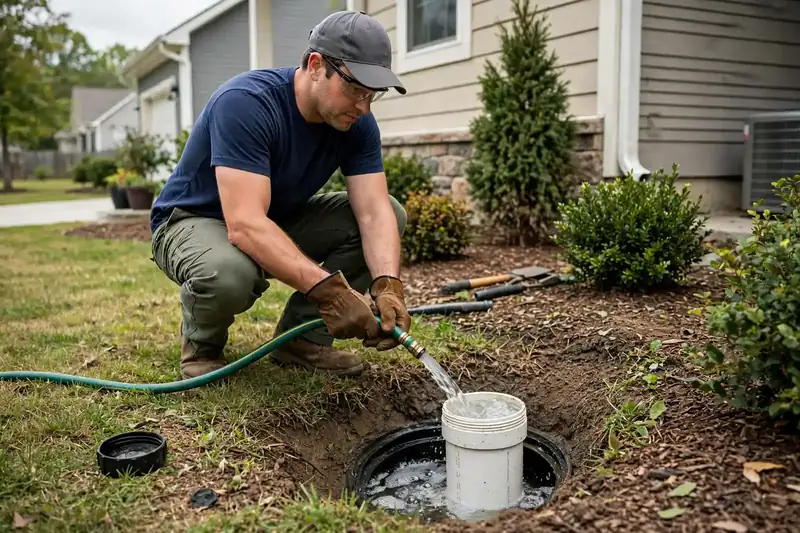
The cheapest sewer repair is the one that never happens. Sewer lines fail slowly — roots thicken, grease plates, joints open — and every one of those slow failures is interceptable with maintenance that costs a fraction of the emergency. Yet most homeowners give their sewer line exactly zero attention until it demands all of it at 2 a.m.
These tips are the practical maintenance discipline for Beverly-area homes: daily habits that protect the line, scheduled professional care calibrated to your line's enemies, and the warning signs that mean “sooner, not later.” Pair them with a maintenance plan and your line becomes infrastructure you manage, not a crisis you await.
Daily Habits: What Goes Down Matters
Your line's worst enemies arrive one flush at a time. Never flush wipes — even those labeled flushable do not disintegrate like toilet paper; they snag on every roughness and seed blockages. Never pour grease down the drain — it cools, plates onto the pipe wall, and narrows the bore month after month; collect it in a container and trash it. Limit the garbage disposal's ambitions — fibrous foods, coffee grounds, and starchy pastes belong in compost or trash, not in a pipe whose joints are already half a century old.
In bathrooms: hair catchers in showers, trash cans for hygiene products, and teaching the household that the toilet handles exactly three things. These habits cost nothing and prevent the most common service calls — the blockages that are behavioral before they are structural.
Yard Habits: Protect the Line From Above
Know where your line runs — the locator map from your camera inspection marks its path — and treat that corridor as infrastructure. Do not plant trees over or near the line. Willows, maples, and oaks are the classic offenders, but any tree within 20 feet of a clay or cast-iron line is a future root intrusion. If landscaping is planned, choose shallow-rooted species and keep them clear of the corridor.
Do not drive or park heavy vehicles over the line's path where it runs shallow — loading cracks older pipe. Do not build over it: sheds, patios, and additions over the lateral complicate every future service and may violate easement terms. And keep the cleanout accessible and capped — a buried or paved-over cleanout turns every future visit into an excavation project.
Scheduled Professional Care
Habits handle what you control; schedules handle what you cannot. Camera inspection every 2–3 years for lines over 30 years old or with known root pressure — the footage catches joint failure, root re-entry, and developing offsets while they are still cheap problems. Scheduled cleaning on the interval your inspection history suggests: root cutting before masses choke flow, jetting before grease narrows the bore.
Seasonal awareness helps in New England: spring's root growth surge and fall's leaf-and-debris loading are the year's two stress peaks. A spring inspection in root-prone areas, and pre-winter confirmation that the line is clear before the ground freezes, align maintenance with the actual threat calendar. Your specialist can set the rhythm from your line's history.
Warning Signs: The Line Talking to You
Lines announce trouble before they fail — if you know the language. Slow drains across multiple fixtures mean the main line, not a fixture trap. Gurgling — especially a toilet gurgling when the washer drains — signals air trapped by a downstream restriction. Sewage odors indoors or in the yard indicate a breach or dry trap. Lush green patches over the line's path in an otherwise ordinary lawn suggest nutrient-rich leakage fertilizing from below.
Recurring blockages at shortening intervals are the clearest signal: the cause is structural, not behavioral, and cleaning is buying time rather than solving. Any of these signs merits a camera inspection promptly — the cost of looking is trivial against the cost of the emergency the sign was warning about. Our signs guide details each symptom's meaning.
Records: The Maintenance Habit That Multiplies the Others
Keep a sewer file: inspection videos and reports, cleaning dates and findings, any repair documentation with warranty terms. This file does quiet work — it lets each new technician start from history rather than zero, it documents diligence for insurance purposes, it supports disclosure in a future sale, and it turns vague worry (“when was the line last looked at?”) into a known date.
The file also disciplines the schedule: when the last inspection recommended re-checking a developing offset in two years, the file reminds you. Maintenance without records decays into good intentions; maintenance with records compounds into a managed asset. Start the file with your next inspection — or reconstruct it from memory and make the next inspection its first real entry.
Related reading
Frequently Asked Questions
What is the single most important maintenance habit?
Regular camera inspections — everything else follows from knowing the line's condition. Habits prevent behavioral blockages, but only the camera catches structural deterioration early. If you do one thing, schedule the baseline inspection: (833) 713-2101.
Are chemical drain cleaners ever okay for maintenance?
No. Caustic cleaners damage pipe walls, kill septic-system bacteria, and create hazards for technicians. Enzyme or bacterial treatments are gentler but cannot clear established blockages — they are adjuncts at best, not maintenance. Mechanical or jetting service is real maintenance.
Should I remove trees near my sewer line?
Not necessarily — but manage the relationship. Do not plant new trees near the line; for existing trees, scheduled root cutting and, decisively, lining the line seals the joints roots exploit. The tree stays; the entry points close. A camera inspection shows which joints are vulnerable.
Does maintenance really prevent emergencies?
Overwhelmingly. Most emergencies are slow failures that went unobserved — roots that thickened for years, grease that plated for seasons. Scheduled inspection and cleaning intercept exactly those progressions. The emergency is what happens when maintenance does not.
What maintenance does a new PVC line need?
Less, but not zero: a baseline camera inspection documenting the as-built condition, then periodic checks every 5 years and habit discipline (no wipes, no grease). New lines fail from installation defects and behavior, not age — the baseline inspection catches the former, habits prevent the latter.
Is a maintenance plan worth it versus calling as needed?
Compare the plan's annual cost against one emergency visit — the plan wins on economics alone, before counting the avoided damage, the priority scheduling, and the documentation history. As-needed calling is how lines become emergencies; plans are how they stay infrastructure.
Sewer Line Problems Don’t Wait. Neither Should You.
Call now and reach a local sewer line specialist serving Beverly, MA and nearby North Shore communities — 24/7.
(833) 713-2101Free to call · No obligation · 24/7 emergency line