
Sewer Maintenance Plans Explained
What belongs in a sewer maintenance plan, what does not, how to price it fairly, and the questions that expose marketing wrappers.
- Practical guide
- Local specialists
- Camera first
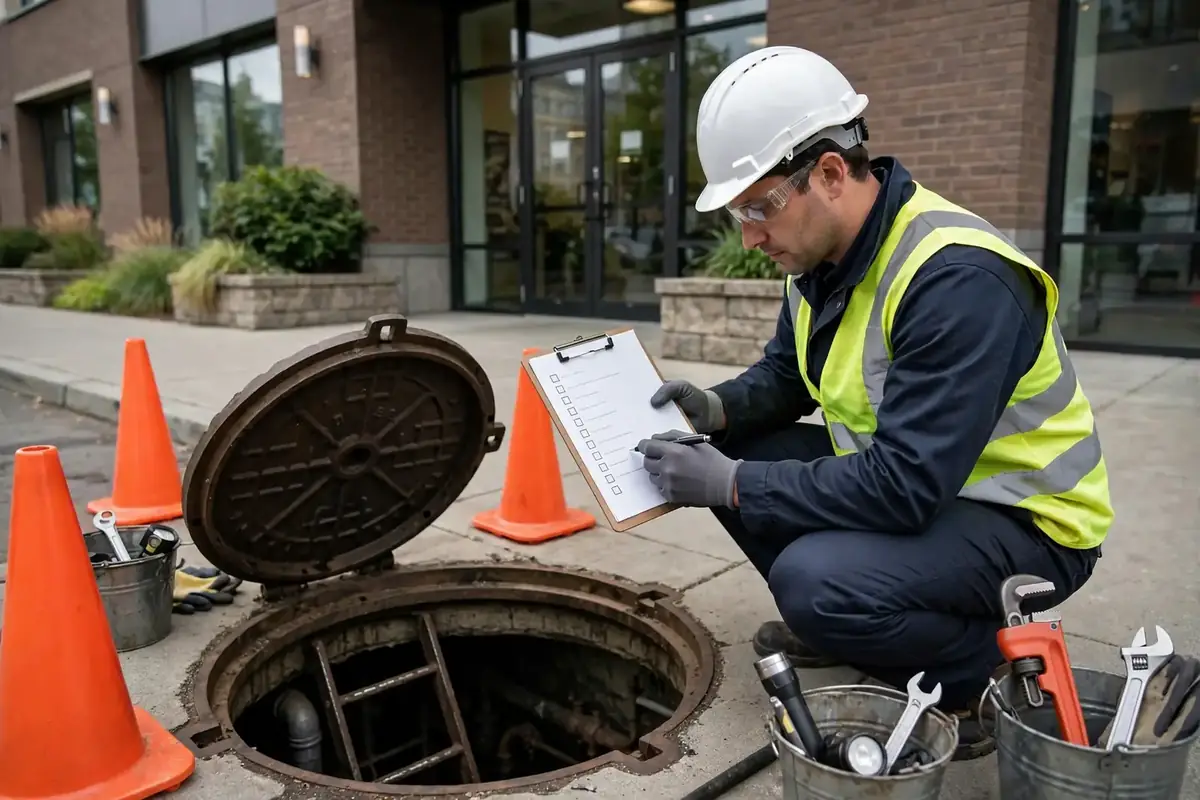
A sewer maintenance plan is a service agreement: scheduled inspections, cleanings, and priority response for a defined annual scope, typically at a set price. Done well, it converts your sewer line from a crisis waiting to happen into managed infrastructure — with documentation to prove it. Done poorly, it is a subscription to services you do not need, sold with urgency you should not trust.
This guide explains what belongs in a plan, what does not, how to evaluate pricing, and the questions that distinguish a genuine maintenance program from a marketing wrapper. For the day-to-day habits that complement any plan, see our maintenance tips.
What Belongs in a Plan
A genuine plan has four components. Scheduled camera inspection at a defined interval — annually for high-risk lines (old clay, heavy roots), every 2–3 years for moderate risk — with the recording and report delivered each time. Scheduled cleaning matched to the line's enemies: root cutting, jetting, or descaling on the interval the inspection history justifies. Priority response: plan members jump the queue for emergency calls, with a defined response commitment. Documentation: the cumulative service history — footage, findings, dates — maintained as a property asset.
Some plans add reduced rates on repairs, annual plumbing checkups beyond the sewer, or reminder scheduling. Those are legitimate sweeteners, not core value — evaluate the plan on its four components first.
What Does Not Belong
Services your line does not need. Annual jetting for a healthy young PVC line is revenue, not maintenance — the plan should be calibrated to your inspection findings, not to a template. Vague scope. “Priority service” without a defined response time, “inspections” without recordings delivered, “reduced-rate promises” off undefined list prices — all marketing fog. Long lock-ins with painful exit terms. A plan confident in its value bills annually or monthly with clean cancellation; multi-year lock-ins with penalties suggest the value needs contractual reinforcement.
Pressure. Maintenance is by definition non-urgent — anyone selling it with countdown tactics or catastrophe stories is disqualifying themselves. The plan conversation should feel like buying insurance from a calm actuary, not a timeshare from a closer.
Evaluating the Price
Price the plan against its components bought separately: what does a camera inspection cost standalone, what does the scheduled cleaning cost, and what is priority response worth to you? A fair plan prices modestly below the sum — the provider gains scheduling efficiency and customer retention, you gain convenience and priority. A plan priced far below the components' sum is either loss-leading for repair upsells or omitting scope; a plan priced above the sum is just expensive.
Then price it against the alternative: the emergency visit the plan is designed to prevent. One avoided backup — with its cleanup, damage, and crisis premium — typically funds years of planned maintenance. The plan's economics are not inspection-versus-nothing; they are planned-care versus crisis-care, and crisis-care always costs more.
Matching the Plan to the Line
Plans should differ by line. Old clay with root pressure (Beverly's pre-war stock): annual inspection, scheduled root cutting, lining evaluation when cutting intervals shorten — the plan manages a known trajectory. Cast iron mid-century: periodic descaling and camera monitoring for wall thinning, with replacement planning as the horizon. Young PVC: light plan — baseline documentation and infrequent checks, honestly priced for low need.
Commercial plans are a separate discipline: grease-program jetting intervals, off-hours scheduling, multi-fixture buildings — see our commercial guide. The principle is identical — calibrate to the actual enemies — but the enemies and the stakes differ. Any provider offering the same plan template to a restaurant and a ranch house is selling templates, not maintenance.
Questions to Ask Before Signing
“What exactly is included, and what is the schedule?” Demand the itemized scope with dates. “What do I receive after each visit?” — recordings, reports, findings in writing. “What is the emergency response commitment?” — hours, not adjectives. “How do I cancel?” — the answer should be simple. “Is this plan based on my line's inspection, or is it your standard template?” — calibration to your footage is the difference between maintenance and marketing.
And the meta-question: does the provider seem to want your line healthy, or your contract signed? The former recommends the light plan for the healthy line and talks you out of overspending; the latter pushes the premium tier regardless of the footage. Trust the provider who sometimes sells you less.
Related reading
Frequently Asked Questions
Are sewer maintenance plans worth it?
When calibrated to the line's actual condition — yes. Planned inspection and cleaning cost a fraction of emergency response, and the documentation history improves every future decision. When templated regardless of condition, they are overspending. The inspection-first plan is worth it; the template plan is not.
What should a plan cost?
Roughly the sum of its components bought separately, minus a modest bundling efficiency — compare against standalone inspection and cleaning prices. Be wary of prices far below component cost (scope is missing) or far above (you are overpaying for convenience).
Can I cancel a maintenance plan?
You should be able to, cleanly. Avoid multi-year lock-ins with penalties; prefer annual or monthly terms with straightforward cancellation. A provider confident in the plan's value does not need contractual handcuffs.
Do renters need maintenance plans, or owners?
Owners — the lateral is the owner's asset and responsibility. Renters should report symptoms promptly (slow drains, odors, gurgling) so the owner's plan or as-needed service addresses them early. Lease language should make reporting duties clear.
How is a residential plan different from a commercial one?
Commercial plans address higher stakes and different enemies: grease-program intervals, off-hours scheduling, multi-fixture buildings, documentation for compliance. The calibration principle is the same, but the scope, frequency, and scheduling discipline are commercial-grade.
Will a plan prevent all emergencies?
No — maintenance dramatically reduces emergency probability but cannot eliminate it; sudden events (construction damage, extreme inflow) still occur. What the plan guarantees is priority response when they do, plus the documentation history that makes the emergency visit faster and better informed.
Sewer Line Problems Don’t Wait. Neither Should You.
Call now and reach a local sewer line specialist serving Beverly, MA and nearby North Shore communities — 24/7.
(833) 713-2101Free to call · No obligation · 24/7 emergency line