
What Causes Sewer Line Collapse | Beverly
The five collapse mechanisms — degradation, root wedging, soil failure, corrosion, trauma — their warning signs, and the recovery path.
- Practical guide
- Local specialists
- Camera first
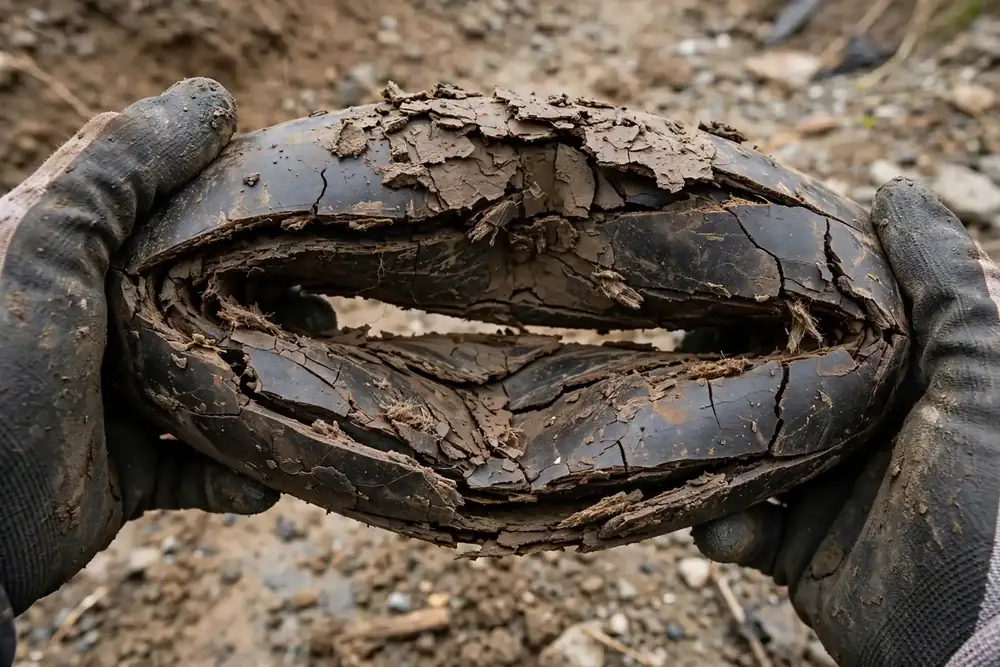
A collapsed sewer line is the end of the line's story — the pipe's structure gives way, the bore closes, wastewater has nowhere to go, and the property has an emergency. Collapses feel sudden, but they are almost never sudden: every collapse is the final chapter of a deterioration story that ran for years, through chapters the camera could have read. Understanding the mechanisms is how you make sure your line's story ends differently.
These are the five mechanisms that collapse sewer lines, the warning signs each one sends, and what to do at each stage. If your line is showing late-stage signs, call (833) 713-2101 — collapse is the failure mode where timing matters most.
Mechanism 1: Material Degradation to Structural Failure
Every pipe material has a structural lifespan, and exceeding it is the commonest collapse path. Orangeburg ovalizes until the arch fails — the textbook progressive collapse, visibly deforming on camera for years before the final give. Cast iron corrodes until the wall perforates and sections crumble. Clay survives as barrels but loses joints until the alignment fails and sections drop. The mechanism is time plus chemistry plus loading, and its signature is gradual deformation visible on successive inspections.
Warning signs: recurring blockages at shortening intervals, the camera showing progressive deformation year over year, sections where the bore is visibly narrowing. Intervention window: years — this is the collapse you schedule, by bursting or replacing before the final failure, if you are inspecting.
Mechanism 2: Root Wedging and Joint Destruction
Roots do not just block pipes — they dismantle them. A root mass growing inside a clay bell exerts wedging force that cracks the bell, displaces the joint, and admits soil; the next growth cycle widens the breach. Over decades, root systems can reduce a jointed line to disconnected segments held in alignment by soil pressure alone — and when the soil shifts, the segments collapse into the void the roots created.
Warning signs: heavy root masses on camera, cracked bells, joints visibly displaced, soil visible through openings. Intervention window: the cutting-to-lining crossover — when cutting intervals shorten and the camera shows structural joint damage, lining or bursting ends the mechanism before it ends the pipe.
Mechanism 3: Soil and Loading Failures
The pipe does not stand alone — the soil-pipe system carries the load together, and soil failure becomes pipe failure. Erosion from infiltration washes bedding out from under the pipe, leaving it spanning a void until it cracks under its own loading. Surface loading — construction equipment, heavy vehicles over shallow lines — exceeds the pipe-soil system's capacity directly. Frost heave in shallow installations flexes rigid pipe beyond its tolerance, winter after winter.
Warning signs: sinkholes or settling above the line, soggy ground indicating infiltration-driven erosion, construction activity over the line's path. Intervention window: address the soil cause — redirect loading, fix infiltration — and structurally renew the pipe before the void grows past the spanning limit.
Mechanism 4: Corrosion and Chemical Attack
Hydrogen sulfide gas — the rotten-egg compound — oxidizes on moist pipe crowns into sulfuric acid, which attacks concrete and iron relentlessly. Industrial or commercial effluents add their own chemistry. The attack concentrates at the crown, thinning the arch that carries the soil load, until the crown fails and the section collapses inward. Cast-iron tuberculation is the visible precursor: the rough scale is the corrosion product, and heavy scale means advanced wall loss.
Warning signs: heavy scale on camera, crown deterioration visible as roughening and thinning at the top of the bore, odor indicating active sulfide generation. Intervention window: descaling and lining while the wall retains structural integrity — once perforation begins, the window is closing.
Mechanism 5: Sudden Trauma
Not all collapses are gradual. Excavation strikes — a backhoe through an unlocated line — crush sections instantly. Nearby blasting or pile driving fractures rigid pipe. Extreme ground movement, from washouts to construction dewatering, shifts soil masses that shear the line. These are the collapses with no warning signs on the pipe itself, because the cause arrived from outside.
Prevention is locating and protection: know where the line is before anyone digs (the locator map), enforce utility clearance on construction sites, and ensure adequate cover and bedding where the line is shallow. Trauma collapses are the argument for the camera-and-locator survey before every project that breaks ground near the line.
After a Collapse: The Recovery Path
A collapsed line means the bore is closed: wastewater cannot pass, and the property is in emergency status until flow is restored. Recovery follows the emergency sequence — stabilization, then diagnosis of the full extent. The camera shows how much of the line is involved; often the collapse is localized, with the remainder of the line in whatever condition its age dictates.
Repair options for collapsed sections: pipe bursting through the collapsed zone where ground permits, or open-cut replacement of the failed segment. The remainder of the line gets its own assessment — a collapse caused by systemic material failure (deforming Orangeburg along the run) argues for full renewal, while a collapse from isolated trauma may justify segmental repair. The footage of the whole line, not just the collapse, makes that call. Our emergency guide covers the crisis response in detail.
Related reading
Frequently Asked Questions
How do I know if my line is close to collapse?
The camera shows it: progressive deformation, cracked bells, displaced joints, visible soil through openings, sections where the bore is narrowing. These are late-stage signs — the intervention window is still open but narrowing. Call (833) 713-2101 for an urgent assessment if your footage shows any of them.
Can a collapsed line be fixed trenchlessly?
Sometimes — pipe bursting can replace a collapsed section where the ground permits, since bursting needs only a path, not an intact pipe. Where bursting is disqualified (bad ground, utility conflicts, grade issues), open-cut replacement is the answer. The post-collapse survey determines which.
Does a collapse always mean replacing the whole line?
No — it depends on the cause. Isolated trauma to an otherwise sound line justifies segmental repair; systemic material failure along the run argues for full renewal. The camera survey of the entire line, not just the collapsed section, makes the distinction.
Will my yard sink if the line collapses?
It can — infiltration washes soil into the broken pipe, creating voids that migrate upward as sinkholes or settling. Surface depression above the line's path is itself a warning sign of subsurface voiding. Both the pipe and the void need addressing in the repair.
How fast does collapse happen once warning signs appear?
Unpredictably — a deforming Orangeburg line can persist for years or give way in a season; a root-wedged joint can hold until one freeze-thaw cycle finishes it. The honest answer is that warning signs mark the window for planned action, and the window closes on the pipe's schedule, not yours.
Is collapse covered by insurance?
The resulting damage may be covered under a water backup endorsement — but the pipe repair itself typically is not, and long-neglected deterioration can complicate claims. Review your coverage before failure, maintain inspection records, and see our insurance guide for the full picture.
Sewer Line Problems Don’t Wait. Neither Should You.
Call now and reach a local sewer line specialist serving Beverly, MA and nearby North Shore communities — 24/7.
(833) 713-2101Free to call · No obligation · 24/7 emergency line