
Sewer Leak Detection Methods Compared
Camera, smoke, acoustic, dye — how each sewer leak detection method works, what it reveals, and the symptom map for choosing correctly.
- Practical guide
- Local specialists
- Camera first
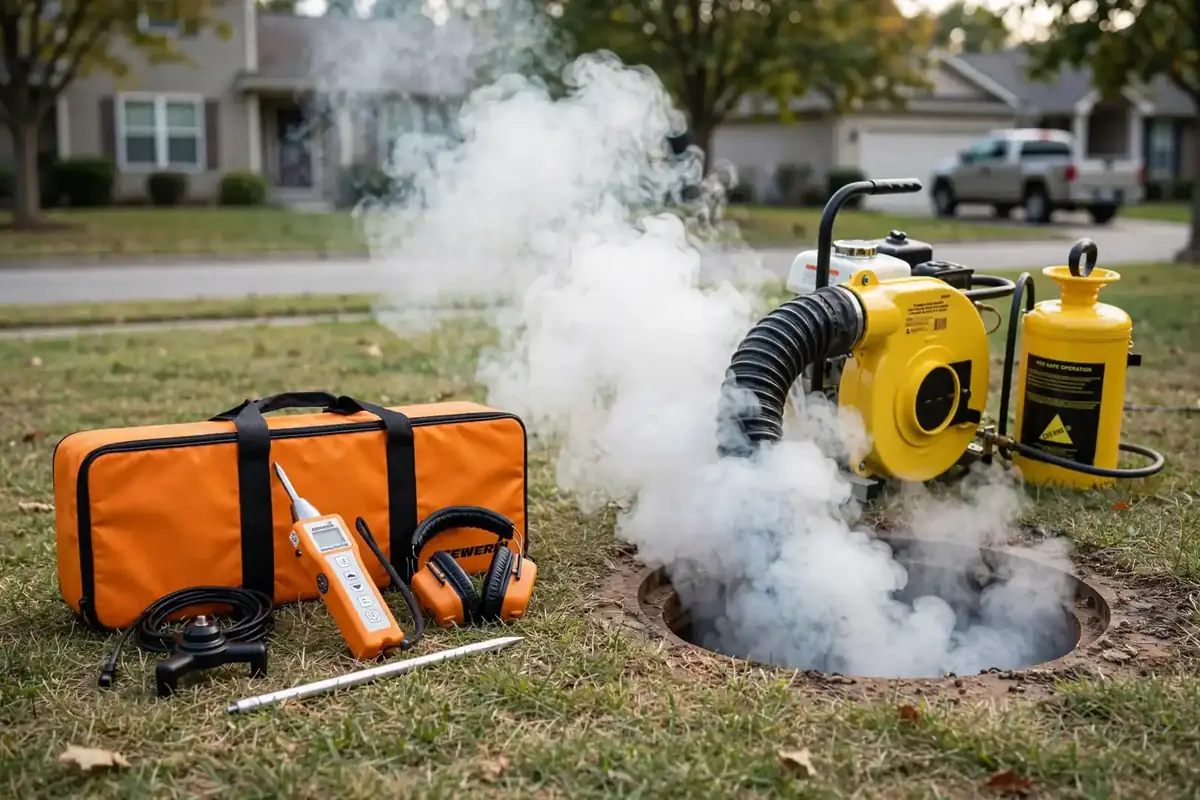
“Leak detection” covers a family of diagnostics, not a single tool — and using the wrong method for the symptom wastes the visit. A camera finds structural defects it can see. A smoke test finds gas-escape paths the camera cannot. Acoustic listening finds pressurized leaks. Dye tracing maps flow paths. Each answers a different question, and a good diagnostician picks the method that matches the mystery.
This guide compares the four primary methods: how each works, what it reveals, and when our leak detection specialists deploy it across Beverly-area homes. If you know your symptom — odor, wet spots, infiltration, unexplained water — this guide points to the right test.
Camera Inspection: The Visual Baseline
The camera is the foundation of every leak investigation: it shows cracks, fractures, open joints, root intrusions, and collapses directly. Its strength is structural truth — what the pipe looks like, footage-marked and recorded. Its limit is that it sees the pipe's interior, not the leak's exterior effects: a hairline crack leaking groundwater inward may read as a damp joint rather than an active leak, and exfiltration (wastewater leaking out) is often invisible from inside.
Use the camera first whenever the question is “what is the pipe's condition.” For infiltration complaints — water entering the line — schedule the inspection during or after wet weather, when active leaks show as visible inflow at joints and cracks. The camera plus timing turns a structural survey into a leak survey.
Smoke Testing: Mapping Escape Paths
Non-toxic vapor forced through the system reveals every breach simultaneously — indoors and out. Smoke escaping from a toilet base, a wall, a foundation crack, or a yard cleanout marks each leak's location precisely. Its strength is completeness: one test maps the whole system's integrity, including defects the camera cannot reach or see — abandoned branches, vent leaks, breaks under slabs.
Smoke testing is the method of choice for odor complaints and suspected exfiltration, and the standard for verifying repairs: a post-repair smoke test with no emergence is proof the system is sealed. Limitations: it needs the system sealable for pressurization, and wind can disperse vapor outdoors — calm days test best.
Acoustic Listening: Hearing Pressurized Leaks
Acoustic sensors detect the sound of water escaping under pressure — the hiss of a leak in a force main, a pumped line, or a pressurized section. The technician places sensors along the suspected path and triangulates the loudest point. Its strength is precision on pressurized systems without excavation; its limit is that gravity sewers — the vast majority of residential laterals — are not pressurized, so there is nothing to hear.
Acoustic detection earns its keep on commercial sites, pumped systems, and municipal force mains — anywhere water moves under pressure. For a typical home's gravity lateral, the camera and smoke test answer the question first; acoustic joins the investigation only where pressure exists.
Dye Tracing: Following the Water
Fluorescent, non-toxic dye introduced at a fixture or cleanout marks water's path visibly: dye appearing in a sump pit, a foundation crack, a stream, or a neighbor's yard traces the leak's route undeniably. Its strength is flow-path proof — it answers “where does this water go” and “where does that water come from” with courtroom clarity.
Dye tracing shines in disputed or complex cases: cross-connections between properties, infiltration sources in wet basements, verifying that a repaired line no longer feeds a wet spot. It is simple, cheap, and definitive — the right tool when the question is about water's journey rather than the pipe's appearance.
Choosing the Method: A Symptom Map
Sewage odor indoors: smoke test first — it maps every escape path. Wet spots or sinkholes in the yard: camera inspection to find the structural break, dye tracing to confirm the flow path if disputed. High water bills or unexplained water: acoustic on pressurized sections, camera on gravity sections. Infiltration during rain: camera inspection timed to wet weather. Post-repair verification: smoke test for sealing, camera for structural confirmation.
In practice, investigations combine methods: the camera establishes structural condition, the smoke test maps breaches, dye confirms paths. A diagnostician who owns only one tool sees every leak through that tool's limits — which is why our contractor vetting guide asks what methods a bidder actually offers. The symptom picks the method; the professional owns them all.
Related reading
Frequently Asked Questions
Which leak detection method is best?
The one that matches your symptom: smoke testing for odors and escape paths, camera for structural condition, dye for flow paths, acoustic for pressurized leaks. Most investigations use two methods — the camera for structure plus the test that matches the complaint. Call (833) 713-2101 and describe the symptom for guidance.
Is smoke testing safe for my home and pets?
Yes. The vapor is non-toxic, food-grade, and dissipates quickly with ventilation. It may leave a faint harmless residue if it emerges through a large breach — which is precisely the breach you wanted found. Pets and occupants can remain with normal ventilation.
Can leak detection find a leak under my slab?
Yes — that is exactly what these methods are for. Smoke testing reveals slab breaches from inside; the camera shows the pipe's condition up to and under the slab; acoustic methods apply if the section is pressurized. No exploratory demolition required.
How long does a leak detection visit take?
A camera inspection runs 45–90 minutes; a smoke test under an hour; combined investigations typically complete in half a day. Complex commercial or multi-source cases can extend the visit — your coordinator will scope it from your description.
Will detection tell me the repair cost?
Detection tells you the defect, its location, and its extent — the three inputs a repair quote requires. The written repair proposal follows the diagnosis, itemized by method, footage, and scope. Diagnosis first, numbers second: that order protects you.
Can I do any of this myself?
Dye tracing is the most DIY-accessible — food coloring in a fixture can reveal crude flow paths. But professional dye is UV-fluorescent for trace detection, and camera, smoke, and acoustic work need specialized equipment and interpretation. For anything beyond curiosity, professional detection pays for itself in accuracy.
Sewer Line Problems Don’t Wait. Neither Should You.
Call now and reach a local sewer line specialist serving Beverly, MA and nearby North Shore communities — 24/7.
(833) 713-2101Free to call · No obligation · 24/7 emergency line